Uthiru is a busy, mostly budget-friendly area along Waiyaki Way on the western side of Nairobi. If you are looking for houses to rent in Uthiru, this guide explains what daily life is like, what to check before you sign, and which nearby areas to compare. It is written for students, young workers and families who want a lower rent without moving far from the city.
Uthiru at a glance
- Location: Along Waiyaki Way, west of Kangemi and close to Kabete and Mountain View.
- Feel: Busy roadside trading centre, with quieter estates as you move away from the highway.
- Housing: Mostly bedsitters, single rooms, one-bedroom and two-bedroom flats, with some older family homes in the estates below the main road.
- Who lives here: Students, young workers and families looking for affordable rent.
Rent: As of 26 Oct 2026, ISHI Homes has no published listings in Uthiru or the estates below it yet, so we do not quote rents here. Live houses appear on the Uthiru area page on ISHI Homes as agencies list them. Until then, compare asking prices from several houses before you decide.
Who living in Uthiru suits, and who it does not
Living in Uthiru tends to suit:

- Students who want a cheaper room within reach of colleges and campuses in the wider Kabete area.
- Young workers heading to Westlands or the city centre along Waiyaki Way.
- Families on a budget who want more space for their money than closer-in areas.
It may not suit you if:
- You want a very quiet, leafy area with little traffic and noise.
- You need guaranteed daily water with no storage tanks.
- You drive and dislike rush-hour jams on Waiyaki Way.
Getting around
Waiyaki Way is Uthiru's main link to Kangemi, Westlands and the city centre in one direction, and towards Kikuyu and beyond in the other. Matatus run along the highway all day, so most people commute by public transport.
What to check:
- Walk to the stage. Some estates below the main road involve a steep or long walk. Try it yourself, ideally in the evening.
- Rush-hour traffic. Morning and evening jams can be heavy. Ask neighbours how long their commute really takes at peak times.
- Fares. Matatu fares often rise at peak hours and when it rains. Budget for this.
- Inner roads. Some side roads are rough or muddy in the rainy season. Check access if you have a car.
Water and power
Water supply varies from street to street, so ask before you commit.
- Ask the caretaker how many days a week water flows from the county supply.
- Check if the building has a storage tank or a borehole (a private well) and whether you pay extra for it.
- Ask how water is billed: a flat monthly charge, a meter, or included in rent.
- For power, check if the house has its own prepaid token meter. A shared meter can lead to disputes over bills.
- Ask neighbours how often power goes out.
Safety
Like many busy Nairobi areas, safety depends a lot on the exact building and street.
- Look for a gated compound with a working gate and, ideally, a caretaker or guard.
- Check that the path from the stage to the house is lit at night.
- Look at door and window grills and locks.
- Talk to people who already live in the building and ask what their experience has been.
- Visit at night as well as during the day if you can.
Shopping and daily life
The roadside trading centre along Waiyaki Way is where most daily shopping happens. Expect small shops, kiosks, open-air market stalls, butcheries and mobile money agents. For bigger shopping trips, many residents go to nearby centres along Waiyaki Way.
Daily life is lively near the highway, with noise from traffic and business. The estates further from the main road are usually calmer, which some families prefer.
Schools and health
There are private and public schools, daycares and small clinics in and around Uthiru, and larger hospitals are reachable along Waiyaki Way.
Before you move with children:
- Visit schools in person and ask about fees, transport and class sizes.
- Find out the nearest clinic or pharmacy to your house and its opening hours.
- Know your nearest hospital for emergencies and how you would get there at night.
Internet
Home fibre is available in parts of Uthiru, but coverage changes from building to building.
- Ask the caretaker which internet providers already serve the building.
- Check your phone signal inside the house, not just outside.
- If you work or study from home, ask a neighbour how reliable their connection is.
Pros and cons
| Pros | Cons |
|---|---|
| Often more affordable than areas closer to town | Heavy traffic on Waiyaki Way at peak hours |
| Direct matatu access along Waiyaki Way | Water supply can be irregular in some streets |
| Good mix of bedsitters and family units | Noise and crowds near the main road |
| Plenty of small shops and services | Some inner roads are rough in the rains |
| Suits students and young families | Long or steep walks to some estates |
Nearby alternatives
If Uthiru is not quite right, compare these areas:
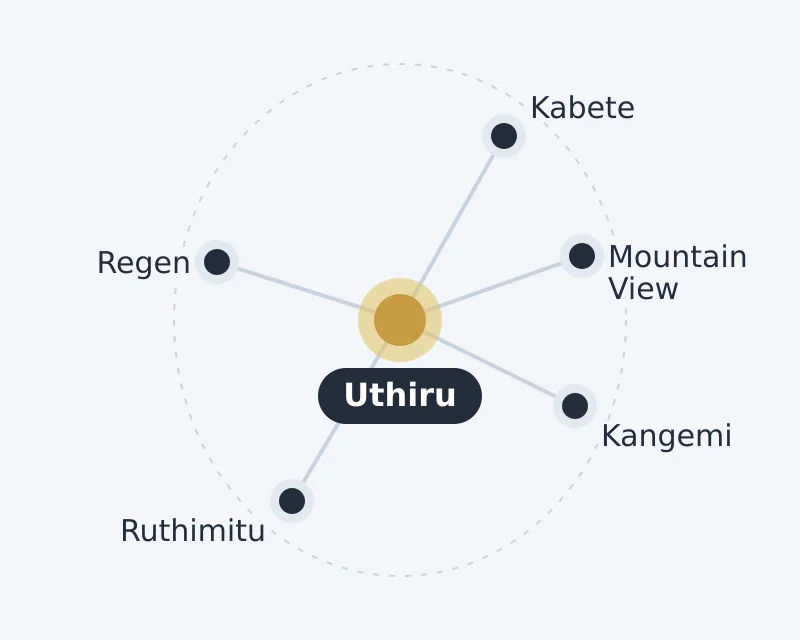
- Kangemi: Closer to Westlands and the city, very busy, with many low-cost rentals.
- Kabete: Next door, with a mix of student housing and quieter family areas.
- Mountain View: Along Waiyaki Way, generally more residential and often higher rent.
- Regen: A residential area nearby, worth checking for family homes.
- Ruthimitu: Further from the highway, often quieter, but check transport and roads.
For each one, use the same checklist: walk to the stage, water days, meter type, security and internet.
Before you pay anything
- Never pay before viewing. Do not send a deposit, booking fee or rent to secure a house you have not seen.
- View the house in person. Check the water, power, locks and surroundings yourself, and confirm who the landlord or agent is.
- Use verified listings. Find verified houses on ISHI Homes at homes.ishi.digital, and check the Uthiru area page for new listings as agencies add them.