If you are looking for houses to rent in Tatu City, you are looking at something different from most of Nairobi's commuter towns. Tatu City is a planned new city in Kiambu County, close to Ruiru. It is being built from scratch with homes, offices, factories, shops and schools in one place. This guide explains what living in Tatu City is like and what to check before you rent.
Tatu City at a glance
| What | In short |
|---|---|
| Type of area | Planned new city, still growing |
| County | Kiambu |
| Rents | Not yet available on ISHI Homes |
| Best for | People who work inside or near the city, families wanting a planned setting |
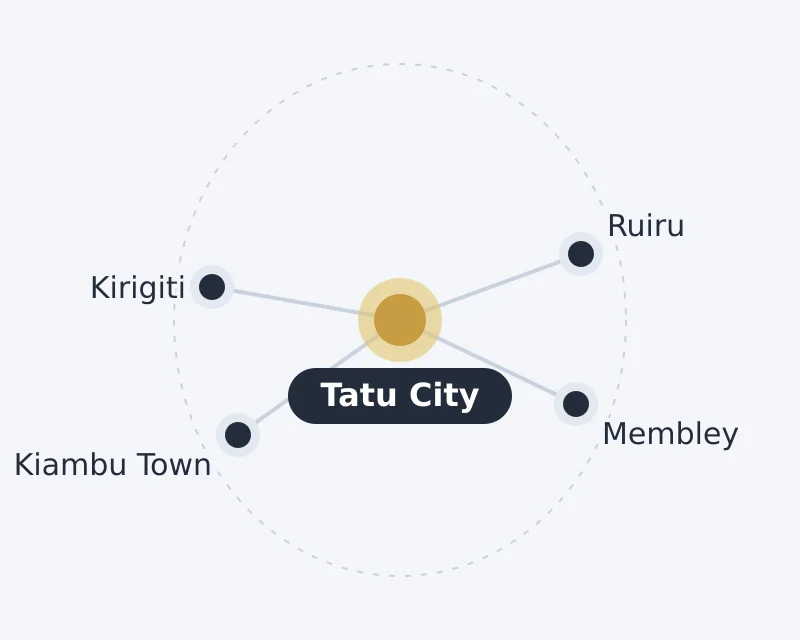
| Main nearby towns | Ruiru, Membley, Kiambu Town, Kirigiti |
As of 26 Oct 2026, ISHI Homes has no published listings in Tatu City yet, so we do not quote rent figures here. Live houses will appear on the Tatu City area page as agencies list them. Check back there for current prices.
Who it suits and who it does not
It may suit you if:
- You work at a company based inside Tatu City.
- You want a quiet, planned area with order and rules.
- You have children and want schools close to home.
- You like new buildings and are happy to pay for that.
It may not suit you if:
- You are on a tight budget. New planned estates often cost more than older towns nearby.
- You commute daily to central Nairobi by public transport and want many options.
- You want a busy, lively area with lots of small kiosks and night life.
Getting around
Tatu City sits near major roads that link Ruiru and Kiambu to Nairobi. If you have a car, getting to the city centre is usually simple, but traffic at rush hour can be heavy.
If you use public transport, ask before you rent:
- Where is the nearest matatu or bus stage, and how do you get there from the house?
- Do boda bodas or shuttles run inside the estate?
- How long does the trip to your workplace take at 7am and 6pm? Try it yourself once before you sign.
Because the city is still being built, transport inside it may be limited in some parts. Walk the route from the house to the main road during your viewing.
Water and power
In a planned city, water and power are often run by the city's own management or a utility linked to it, not only the county. This can mean more reliable supply, but it can also mean extra charges.
Ask the landlord or agent:
- Who supplies water, and is it metered per house?
- Is there a storage tank, and how big is it?
- Are there water rationing days?
- Is power on prepaid tokens or a postpaid bill?
- Is there a backup generator for shared areas?
Also ask about the service charge. This is a monthly fee for things like security, garbage collection, street lights and cleaning of shared areas. Find out the amount and whether it is included in the rent.
Safety in Tatu City
Planned estates often have controlled gates, guards and rules about who can enter. That can make the area feel calmer than open neighbourhoods. Still, do not take safety for granted.

During your viewing, check:
- Is there a manned gate and do guards check visitors?
- Are there working lights on the paths and parking?
- Are doors and windows strong, with good locks or grills?
- What do current tenants say? Ask one or two if you can.
Visit once in the evening if possible, so you see what the area is like after dark.
Shopping and daily life
Tatu City is designed so that people can live, work and shop in the same place. Some shops and services are already open, while others are still coming. Daily life can feel quieter than in Ruiru town.
Before you move, find out:
- Where you will buy food and household items each week.
- Whether there is a market for fresh produce nearby, or if you will go to Ruiru.
- Where the nearest bank, M-Pesa agent and pharmacy are.
Schools and health
Schools are one of the main reasons families look at Tatu City. The city has private schools inside it. Fees can be high, so visit and ask for the fee list before you choose a house based on a school.
For health, ask where the nearest clinic and the nearest hospital with emergency services are. For bigger hospitals you may need to travel to Ruiru, Kiambu or Nairobi. Check how long that trip takes.
Internet
New estates are often built with fibre cables already in place. Ask which internet providers serve the exact building, and whether you can choose your own. Test the mobile signal inside the house during the viewing, especially if you work from home.
Pros and cons of living in Tatu City
| Pros | Cons |
|---|---|
| Planned, orderly layout | Rent and service charges may be higher |
| Jobs and businesses inside the city | Still growing, some services not yet open |
| Schools close by | Fewer public transport options in places |
| Gated, managed estates | Can feel quiet, less street life |
| Newer houses | Few listings so far |
Nearby alternatives
If Tatu City does not fit your budget or needs, compare these nearby areas:
- Ruiru - a busy town with many rental options and more public transport. Often a good choice if you work in Tatu City but want more variety.
- Membley - a residential estate area near Ruiru, popular with families looking for a quieter setting.
- Kiambu Town - the county's main town, with markets, offices and a mix of older and newer houses.
- Kirigiti - near Kiambu Town, with a mix of homes and easy access to the town.
Look at the area pages on ISHI Homes to compare houses in each.
Before you pay anything
- Never pay before viewing. Do not send a deposit or "booking fee" for a house you have not seen.
- View the house in person. Check water, power, locks and the route to the road yourself.
- Use verified listings. Find verified houses on ISHI Homes at homes.ishi.digital.