If you are looking for houses to rent in Kawangware, you are probably after a lower rent while staying close to the richer side of Nairobi. Kawangware is a busy, crowded budget area in western Nairobi, next to Lavington and not far from Kilimani. This guide covers what living in Kawangware is like, what to check before you move, and which nearby areas to compare.
Kawangware at a glance
| Type of area | Busy, crowded, mostly budget housing |
| Common houses | Single rooms, bedsitters, one- and two-bedroom flats |
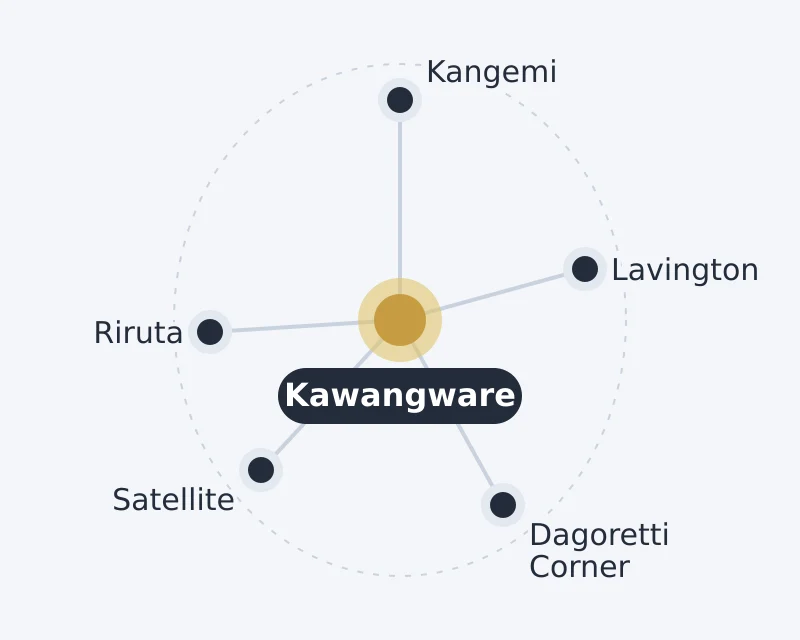
| Close to | Lavington, Kilimani, Kangemi, Dagoretti Corner, Riruta, Satellite |
| Best for | Renters on a budget who work or study on the west side of the city |
Rent: As of 26 Oct 2026, ISHI Homes has no published listings in Kawangware yet, so we do not quote rent figures here. Live houses will appear on the Kawangware area page on ISHI Homes as agencies list them. Until then, compare prices by viewing several houses and asking neighbours what they pay.
Who it suits and who it does not
It suits you if:
- You want lower rent but work in or near Lavington, Kilimani or Westlands.
- You are a student, young worker or small family on a tight budget.
- You like a lively area with shops, kiosks and markets close by.
It may not suit you if:
- You want quiet streets, open space or a gated compound.
- You need a lot of parking for a car.
- You find crowds, noise and busy roads tiring.
Getting around
Transport is one of Kawangware's strong points. Matatus run often between the area and the city centre, and many people walk or take a boda boda (motorbike taxi) to nearby areas like Lavington for work.
Things to check:
- Your daily route. Ride your actual route to work or school at rush hour before you sign. Traffic on the main roads can be slow in the morning and evening.
- Fares. Matatu fares often go up at peak hours and when it rains. Ask locals what they usually pay.
- Distance from the stage. A house close to the main road is easier for transport but often noisier. A house deeper inside may be quieter but means a longer walk, sometimes on unlit paths.
- Parking. If you drive, confirm there is safe parking inside the compound. Many plots have little or none.
Water and power
Water supply can be uneven in parts of Nairobi, so ask carefully.

- Ask the caretaker how many days a week water comes from the county supply.
- Check if the building has a storage tank, and how big it is.
- Ask whether water is included in rent or billed separately, and how the bill is shared.
- Turn on the taps during your viewing.
For electricity, ask whether the house has its own prepaid token meter from Kenya Power or shares one with other tenants. A personal meter avoids arguments over bills. Ask neighbours how often power goes off.
Safety
Like any crowded area, safety can change from one street or plot to the next. Do not rely on general opinions. Check for yourself:
- Is there a strong gate and a caretaker or guard?
- Is the path from the main road lit at night?
- Walk around the area in the evening as well as during the day.
- Ask current tenants and nearby shopkeepers how safe they feel and if there have been break-ins.
- Check the door, windows and locks of the house itself.
Shopping and daily life
Daily needs are easy to find. Expect plenty of small shops, kiosks, butcheries, open-air markets and mama mboga (vegetable sellers) close to most houses. Food and household goods are often cheaper here than in nearby upmarket areas. For bigger shopping, many residents travel to larger shops in nearby areas.
The area is lively, with music, street trade and people out until late. Some people love this energy. If you want calm, look for a house set back from the main roads.
Schools and health
There are public and private schools and clinics in and around Kawangware. Quality and fees vary a lot, so:
- Visit any school you are considering and ask about fees, class sizes and results.
- Find the nearest clinic and the nearest larger hospital before you move, especially if you have children or an ongoing health need.
- Check that your health cover, such as your SHA or private insurance, is accepted at the clinic you plan to use.
Internet
Mobile data works in most of the area. For home fibre, ask the caretaker which providers already serve the building. Then check coverage on the provider's website or by calling them with the exact location. Ask neighbours how reliable their connection is.
Pros and cons of living in Kawangware
| Pros | Cons |
|---|---|
| Lower rent than nearby upmarket areas | Crowded and noisy in many parts |
| Close to Lavington and Kilimani for work | Traffic can be slow at rush hour |
| Frequent matatus and boda bodas | Water supply can be uneven |
| Cheap food and daily shopping close by | Limited parking in many plots |
| Wide choice of small houses | Safety varies by street and plot |
Nearby alternatives
If Kawangware is not quite right, compare these nearby areas:
- Kangemi - another budget area on the west side, with a similar busy feel.
- Dagoretti Corner - nearby, worth comparing for price and transport links.
- Riruta and Satellite - neighbouring areas that some renters find a little calmer.
- Lavington - much more upmarket and quieter, with higher rent, if your budget allows.
Visit at least two areas before you decide. The same budget can get you a different size or quality of house a short distance away.
Before you pay anything
- Never pay before viewing. Do not send a deposit or "booking fee" to hold a house you have not seen.
- View the house in person. Check the water, power, locks and the area around it with your own eyes, and meet the landlord or agent.
- Use verified listings. Find verified houses on ISHI Homes (homes.ishi.digital) and watch the Kawangware page for new listings.