
If you are looking for houses to rent in Tigoni, you are probably after space, quiet and green views. Tigoni sits near Limuru in Kiambu County. It is known for tea farms, cool weather and homes on large plots. This guide explains what living in Tigoni is like, who it suits, and what to check before you sign.
Tigoni at a glance
- Feel: Upmarket and rural. Big compounds, hedges, tea fields and quiet roads.
- Homes: Mostly standalone houses, maisonettes and cottages on wide plots. Fewer flats than in towns.
- Weather: Cool, often misty, and cold at night. Many homes have fireplaces.
- Rent on ISHI Homes: As of 26 Oct 2026, no Tigoni listings are published yet. Live houses will appear on the Tigoni area page on ISHI Homes as agencies list them.
Because many homes are large and privately owned, rents can vary widely. Compare a few houses before you decide.
Who Tigoni suits and who it does not
It suits:
- Families who want a garden, space for children and room for pets.
- People who work from home or go into Nairobi only a few days a week.
- Anyone who enjoys cool weather, walking and a slow pace.
- People with their own car.
It may not suit:
- People who commute to Nairobi every day by public transport.
- Those who want shops, restaurants and nightlife close by.
- People on a tight budget looking for a single room or bedsitter.
- Anyone who does not like cold, damp weather.
Getting around
Tigoni feels far from the city, and in daily life it can be. Most residents drive. Public transport runs on the main roads, but many houses sit down quieter side roads, away from the stage.
What to check:
- How far the house is from the nearest matatu stage, and whether you can walk there safely at night.
- The state of the access road. Some murram (unpaved) roads get muddy and slippery in the rains.
- How long the drive to your workplace takes at rush hour. Try it yourself on a weekday morning.
- Whether boda bodas or taxis are easy to get from the house.
Water and power
Water supply differs from house to house. Some homes are on county water, others rely on boreholes (deep wells drilled into the ground), and many also store rainwater in tanks.
Ask the landlord or agent:
- Where the water comes from and how many days a week it flows.
- How big the storage tanks are.
- Who pays for borehole pumping, repairs or water bowsers (delivery trucks).
For power, ask how often outages happen and how long they last. In rural areas, a fallen tree or bad weather can cut power. Check if the house has a prepaid meter, a backup generator or solar. Also ask about hot water, since the cold weather makes a working heater or shower important.
Safety
Tigoni is generally quiet, but large plots and empty roads bring their own risks. Do not rely on reputation alone. Check the house itself.

- Look at the fence, gate and locks.
- Ask if there is a guard, alarm or response company, and who pays for it.
- Check lighting along the access road and around the compound.
- Talk to neighbours or the nearest shop owner about the area.
- Visit once in the evening to see how it feels after dark.
Shopping and daily life
Daily life is calm. Small shops and kiosks cover basics like bread, milk and airtime. For a big shop, most residents drive to Limuru or other nearby towns, or go into Nairobi.
Many people enjoy fresh farm produce from local vendors. Weekend life is often about walks, the garden and visiting friends. If you like eating out often, expect to drive.
Also ask about domestic help. Many large homes have staff quarters (a small separate house for a worker), which can be useful for families.
Schools and health
The wider Limuru and Tigoni area has a range of schools, including some boarding and international schools. Do not assume a school is close or has space. Visit, ask about fees and transport, and check if the school runs a bus to your road.
For health, find the nearest clinic and hospital before you move. Note how long it takes to drive there at night. Keep emergency numbers saved on your phone.
Internet
Internet is important if you work from home. Fibre covers some parts of the area but not all. Before you sign:
- Ask the landlord which providers already serve the house.
- Check mobile signal inside every room, not just at the gate.
- Ask a neighbour how reliable their connection is.
If fibre is not available, a home 4G or 5G router may work, but test the signal first.
Pros and cons of living in Tigoni
| Pros | Cons |
|---|---|
| Space, gardens and big compounds | Hard daily commute without a car |
| Quiet, green and scenic | Few shops and restaurants nearby |
| Cool, fresh climate | Cold and damp, especially at night |
| Good for families and pets | Water and power can vary by house |
| Upmarket, private feel | Fewer budget options |
Nearby alternatives
If Tigoni does not fit, look at these nearby areas:
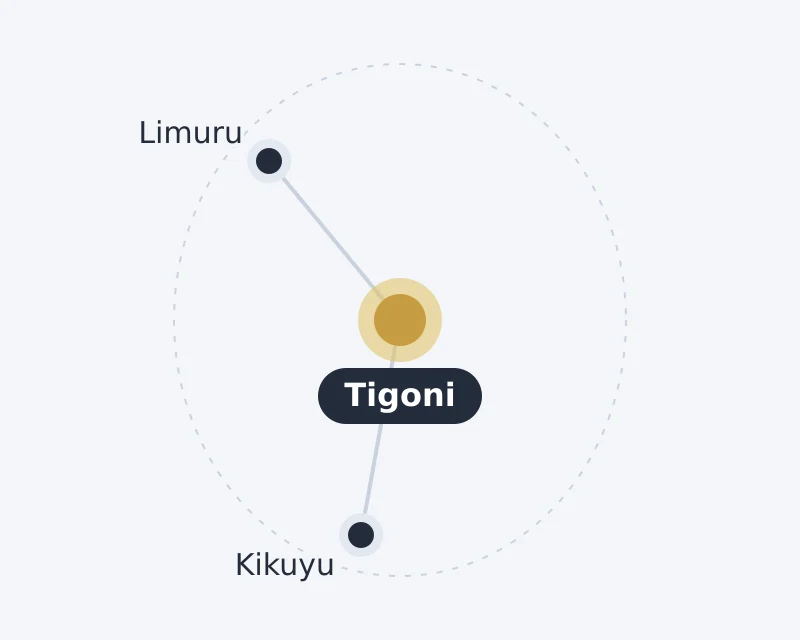
- Limuru: A busier town with more shops, services and public transport. Homes range from flats to houses, so there is more choice for different budgets.
- Kikuyu: Closer to Nairobi and busier, with a mix of flats and houses. A good option if you commute daily and want more transport choices.
Tigoni offers more space and quiet. Limuru and Kikuyu offer more convenience.
Before you pay anything
- Never pay before viewing. Do not send a deposit or booking fee for a house you have not seen.
- View the house in person. Check water, power, locks, signal and the access road yourself.
- Use verified listings. Find verified houses on ISHI Homes at homes.ishi.digital, and check the Tigoni area page as new homes are listed.