If you are looking for houses to rent in Nairobi West, you are probably after a home close to the CBD without paying city-centre prices. Nairobi West is popular with students and young professionals because it is near town and next to Madaraka. This guide covers what living in Nairobi West is like and what to check before you rent.
Nairobi West at a glance
| Item | What to know |
|---|---|
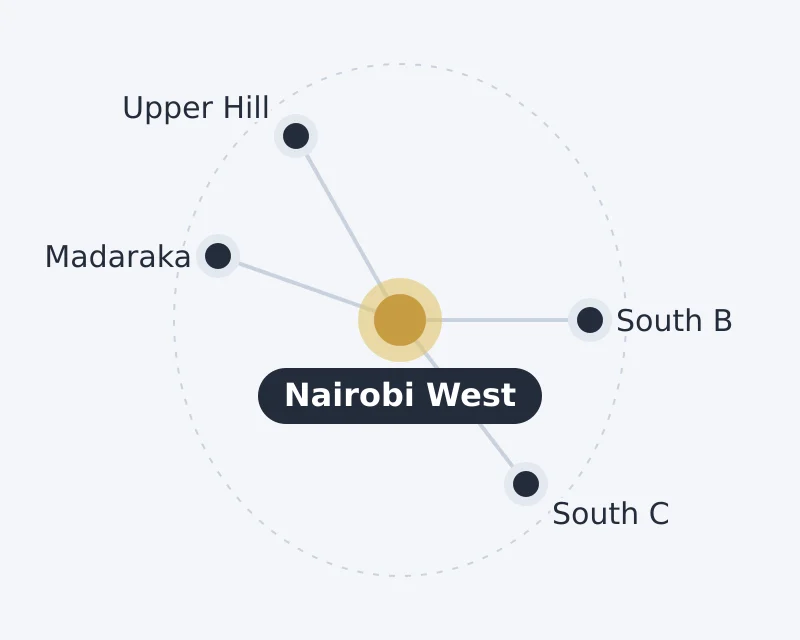
| Location | South of the CBD, next to Madaraka and close to South B and South C |
| Typical homes | Bedsitters, studios, one- and two-bedroom flats, some older houses |
| Main renters | Students, young professionals, small families |
| Rent on ISHI Homes | No listings published yet (as of 26 Oct 2026) |
About rent: As of 26 Oct 2026, ISHI Homes has no published listings in Nairobi West, so we do not quote rent figures here. Live houses appear on the Nairobi West area page as agencies list them. Check there for current prices.
When you compare houses, ask for the full move-in cost. This is the money you pay before getting the keys. It usually includes the first month's rent and a deposit (money the landlord holds and should return when you leave, minus any agreed repairs). Some landlords also ask for a water or power deposit.
Who Nairobi West suits, and who it does not
It suits:
- Students who want to live close to colleges and universities in the area and in nearby Madaraka
- Professionals who work in the CBD or Upper Hill and want a short commute
- People who want a busy area with shops and food places nearby
- Renters looking for smaller units like bedsitters and studios
It may not suit:
- Families who want a large compound, gardens and a very quiet street
- People who need lots of parking space
- Anyone who dislikes noise, traffic or busy roads
Getting around
Nairobi West's biggest plus is being near town. Many residents use matatus, boda bodas, ride-hailing apps or walk for short trips.
Before you rent:
- Do the trip to your work or campus at rush hour, not just on a weekend
- Ask neighbours which stages they use and how busy they get in the morning
- Check if the house is a safe walk from the main road at night
- If you drive, ask whether parking is included and if it is secure
Traffic around the area can be heavy at peak times, so test it yourself.
Water and power
Water supply varies from building to building in Nairobi. Some buildings have steady supply, while others depend on storage tanks or bought water during dry periods.
Ask the landlord or caretaker:
- How many days a week does water come?
- Is there a storage tank, and how big is it?
- Is water billed separately, and how?
- Is the electricity meter prepaid (tokens) or postpaid, and is it in your unit only?
Turn on the taps and check the meter during your viewing. Talk to a current tenant if you can.
Safety
Safety depends a lot on the exact building and street. Look for:

- A gate with a guard or caretaker
- Good lighting at the entrance and on the path to the road
- Strong doors, window grills and working locks
- How the area feels in the evening, not only in the day
Visit after dark once before deciding. Ask neighbours how they feel about safety in that block.
Shopping and daily life
Nairobi West is a busy, lived-in area. You will usually find small shops, kiosks, food places, salons and markets close by. Bigger shopping is within reach in nearby estates and the CBD.
Because many students live here, there is often a lively feel, with eateries and services that suit people on a budget. Walk around the street near the house to see what is within reach.
Schools and health
The area and its neighbours have schools, colleges and health facilities, but quality and fees vary. If you have children or a health need:
- Visit schools yourself and ask about fees and transport
- Find the nearest clinic or hospital and check its hours
- Ask whether it works with your insurance cover
Internet
Most parts of Nairobi West have mobile data coverage, and home fibre is common in many buildings near the city. Still, check:
- Which internet providers already serve the building
- Whether fibre is installed or you need to apply
- Mobile signal inside the house, not just outside
This matters a lot if you study online or work from home.
Pros and cons of living in Nairobi West
| Pros | Cons |
|---|---|
| Close to the CBD and Upper Hill | Traffic at peak hours |
| Next to Madaraka, good for students | Can be noisy and busy |
| Many small units like bedsitters and studios | Water supply varies by building |
| Shops and food places nearby | Limited parking in some blocks |
Nearby alternatives
If Nairobi West does not fit, look at these nearby areas:
- Madaraka: Right next door and popular with students. Worth comparing if you study nearby.
- South B: A settled estate with many flats. Often suits families and working people.
- South C: Tends to be quieter and more residential, with a mix of flats and houses.
- Upper Hill: Home to many offices. Good if you work there, but housing options and prices differ.
Compare commute, water supply and move-in costs across two or three areas before you choose.
Before you pay anything
- Never pay before viewing. Do not send a deposit or booking fee for a house you have not seen.
- View the house in person. Check water, power, locks and the street yourself, or send someone you trust.
- Find verified houses on ISHI Homes. Browse listings at homes.ishi.digital and check the Nairobi West page as agencies add houses.