Pipeline is one of Nairobi's busiest estates. It sits in Embakasi, in the east of the city, and is known for tall, closely packed apartment blocks and low-cost living. If you are looking at houses to rent in Pipeline, this guide explains what daily life is like, what to check before you move in, and which nearby estates to compare.
Pipeline at a glance
- Type of area: Dense, mostly high-rise rental blocks, many with small units like bedsitters, single rooms and one-bedroom flats.
- Who lives there: Young workers, students, small traders and families on a tight budget.
- Main draw: Lower rent than many other parts of Nairobi, busy markets and plenty of public transport.
- Main concern: Crowding, water supply and the quality of some buildings.
Rent: As of 26 Oct 2026, ISHI Homes has no published listings in Pipeline yet, so we do not quote rent figures here. Live houses will appear on the Pipeline area page on ISHI Homes as agencies list them.
Who it suits and who it does not
It suits you if:
- You want affordable rent and can live with a small space.
- You work in Embakasi, Industrial Area, along Mombasa Road or near the airport.
- You like being close to shops, markets and food kiosks.
- You depend on matatus and want transport near your door.
It may not suit you if:
- You want quiet, open space or a garden.
- You need parking for more than one car.
- You have young children and want a calm, low-traffic street.
- You cannot handle water shortages without a backup plan.
Getting around
Pipeline has a lot of public transport. Matatus run from the estate towards the city centre and to nearby areas in Embakasi. Boda bodas (motorbike taxis) are everywhere for short trips.
Traffic can be heavy, especially in the morning and evening rush. Before you rent:
- Do the trip to your workplace at the time you would normally travel.
- Ask neighbours which stage is best and how long the trip usually takes.
- Check how far the house is from the main road. Some inner lanes are narrow and get muddy when it rains.
Water and power
Water is one of the biggest questions in Pipeline, as in much of Eastlands. Some buildings get county water only on certain days, and many rely on storage tanks or boreholes.
Ask the landlord or caretaker:
- Which days water comes, and whether there is a tank or borehole.
- Whether water reaches the upper floors, or if tenants carry it up.
- How water is paid for - included in rent, a fixed monthly charge, or by meter.
For electricity, most units use prepaid tokens. Ask whether each unit has its own meter. A shared meter can cause arguments over bills. Check the sockets and switches during your viewing.
Safety, including building safety
Like any busy estate, Pipeline has some streets that feel safer than others. Walk the area in the day and in the evening before you decide. Look for a gate, a caretaker or guard, and lighting on the stairs and around the building.

Building safety matters a lot in high-rise estates. Some blocks in Nairobi have been built without proper approval. Before you sign, check:
- Cracks: Look for large cracks in walls, columns and stairs, not just small paint cracks.
- Floors and height: Very tall blocks on narrow plots, or floors that look added later, are a warning sign.
- Approval: Ask the landlord if the building was approved by the county and registered with the National Construction Authority (NCA, the body that oversees building works). A genuine landlord should not mind the question.
- Exits: Make sure the stairs are clear and there is a safe way out in case of fire.
- Water damage: Damp walls and leaking roofs can weaken a building over time.
If something feels wrong, walk away. A cheap house is not worth the risk.
Shopping and daily life
Pipeline is busy and full of small businesses. You will find open-air markets, groceries, butcheries, salons, hardware shops and food kiosks close to most blocks. Fresh vegetables and everyday items are easy to get, often at lower prices than in upmarket areas.
The area is noisy, with music, traffic and street trade late into the evening. If you need quiet, ask for a unit on an inner side of the building, away from the road.
Schools and health
There are many private and public schools and small clinics in and around Pipeline. Quality varies a lot. Visit any school before you enrol a child, and ask other parents for their views. For health, find the nearest clinic and the nearest larger hospital before you need them, and check whether they accept your insurance or NHIF/SHA cover.
Internet
Several home internet providers offer fibre in parts of Embakasi, and mobile data works in most places. Coverage can differ from one building to the next. Ask the caretaker which providers already serve the block, and test your phone signal inside the unit during the viewing.
Pros and cons of living in Pipeline
| Pros | Cons |
|---|---|
| Affordable rent compared to many areas | Crowded and noisy |
| Plenty of matatus and boda bodas | Heavy traffic at rush hour |
| Busy markets and cheap food | Water supply can be unreliable |
| Close to Embakasi, Mombasa Road and the airport side | Some buildings may be poorly built |
| Many small units for singles and couples | Little parking or open space |
Nearby alternatives
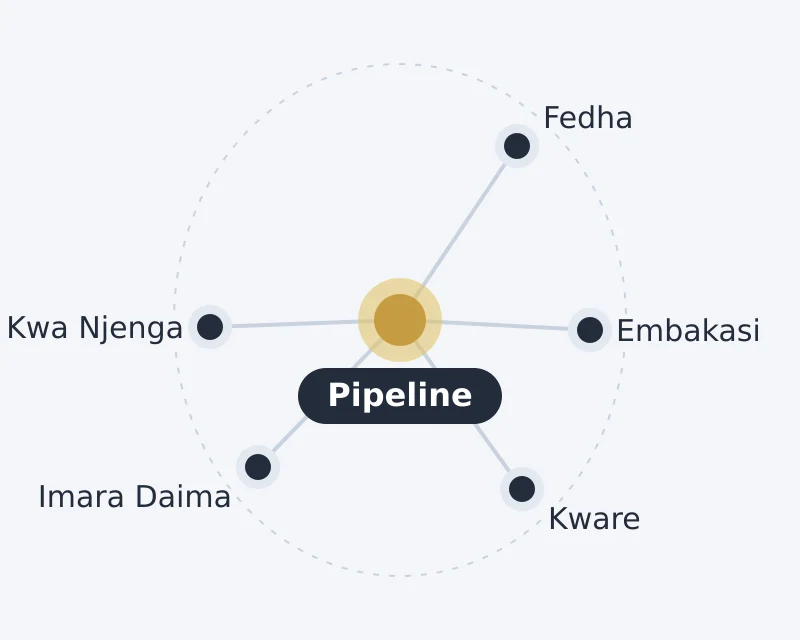
If Pipeline is not quite right, compare these nearby estates:
- Embakasi: The wider area has a mix of older estates and newer blocks, with some calmer pockets.
- Fedha: Often seen as quieter, with more family-style flats.
- Imara Daima: Popular with families and close to Mombasa Road.
- Kwa Njenga: Usually lower cost, but check roads, water and building quality carefully.
- Kware: Similar to Pipeline - dense, busy and affordable. Apply the same building checks.
Visit two or three areas before you choose. Compare the trip to work, water supply and how safe the building feels.
Before you pay anything
- Never pay before viewing. Do not send a deposit or "booking fee" for a house you have not seen.
- View the house in person. Check the unit, water, power, stairs and the building itself. Meet the landlord or agent face to face.
- Use verified listings. Find verified houses on ISHI Homes at homes.ishi.digital, where new Pipeline houses appear on the area page as agencies list them.