Ongata Rongai is a busy town just south of Nairobi, popular with students, young workers and growing families. If you are looking at houses to rent in Ongata Rongai, you will find rents lower than many Nairobi estates. The trade-off is traffic on Magadi Road and water that can be unreliable. This guide covers what living there is really like, so you can decide before you view.
Ongata Rongai at a glance
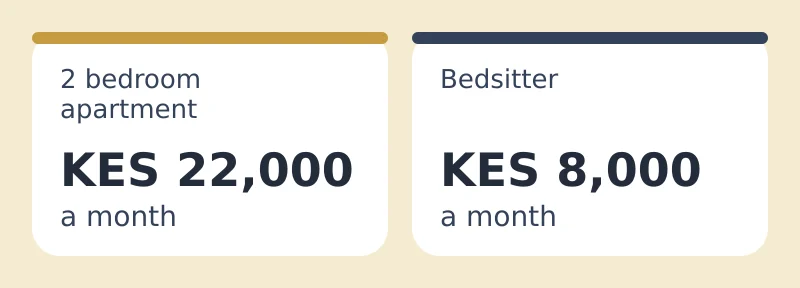
These figures come from ISHI Homes listings in Ongata Rongai and nearby estates, as of 25 Oct 2026.
| House type | Median rent a month | Typical rent plus deposit |
|---|---|---|
| Bedsitter | KES 8,000 | KES 16,000 |
| 2 bedroom apartment | KES 22,000 | KES 44,000 |
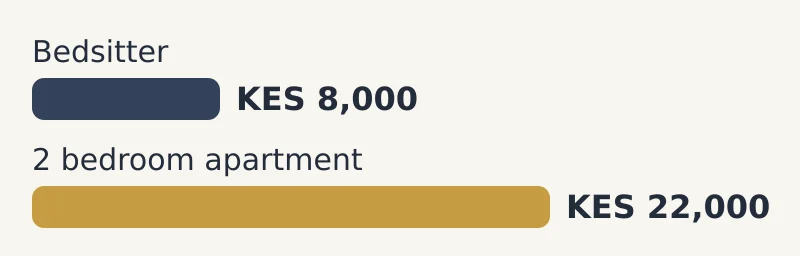
The median is the middle price, so half of homes cost less and half cost more. Each figure is based on only one listing, so treat it as a rough guide, not a fixed price. The deposit is money you pay upfront and should get back when you move out, if the house is in good condition. Here it is usually one month's rent.
Who it suits and who it does not
Living in Ongata Rongai suits:
- Students at the universities and colleges in and around the town, who want cheap bedsitters and single rooms.
- Young families who want a 2 or 3 bedroom home for less than they would pay closer to the city.
- People working in Karen, Lang'ata or the south of Nairobi, who face a shorter trip than those going to the CBD.
It may not suit you if:
- You must reach the CBD or Westlands early every day and cannot handle long jams.
- You want quiet streets. Central Rongai is loud, crowded and full of matatus and bodabodas.
- You need steady piped water with no backup.
Areas within Rongai: Tuala, Nkoroi and Gataka
Rongai is not one place. The estates around it feel quite different.
- Rongai town centre: busiest and most convenient. Lots of bedsitters and student housing, shops and transport, but also noise and congestion.
- Nkoroi: often quieter and more residential, with more family flats and gated homes. Check how far the house is from the main road and what the access road is like.
- Tuala: further out along the road towards Kiserian. Often more space for the money, but a longer daily trip.
- Gataka: close to the town, with a mix of flats and student rooms. Some inner roads can be rough, especially in the rains.
Visit at different times of day. A street that is calm at noon can be packed at 6 pm.
Getting around and Magadi Road traffic
Most people use matatus along Magadi Road to and from Nairobi. Matatus run often, and fares tend to rise at rush hour or when it rains.
The big issue is Magadi Road traffic. Rongai has one main road in and out towards Nairobi, so mornings and evenings can be very slow. Tips:
- Do the trip yourself at rush hour before you sign a lease.
- Ask neighbours how long their daily commute takes.
- If you drive, check if the house has secure parking and how the access road holds up in the rains.
- Bodabodas are common for short trips inside the estates.
Water and power
Water is the most common complaint in Rongai. Many homes depend on boreholes, storage tanks or water bought from vendors.
Before you rent, ask:
- Where does the water come from: county supply, borehole or both?
- Is there a storage tank, and how big is it?
- How many days a week does water flow?
- Is water included in rent or billed separately?
For power, check whether the house has its own prepaid token meter. A shared meter can lead to disputes over bills. Ask neighbours how often blackouts happen.
Safety
Safety differs from street to street. Do not rely on general claims, good or bad. Check for yourself:
- Is there a gate, a guard or a caretaker who lives on site?
- Is the path from the matatu stage to the house well lit at night?
- Talk to tenants already living in the building.
- Look at the locks, windows and grills.
Busy areas near the town centre can attract pickpockets, so keep your phone and wallet close.
Shopping and daily life
Rongai has supermarkets, open-air markets, kiosks, eateries and plenty of mama mboga stalls. You can buy most daily needs without going into Nairobi. Rents and food prices are generally friendlier to students and young earners. Weekends in the town centre can be lively and noisy.
Schools and health
There are many private and public schools, from nurseries to secondary schools, plus colleges and universities. There are also clinics and private hospitals. Quality varies, so visit schools, ask about fees and check how children will get there. For health, find the nearest clinic and the nearest hospital with emergency care before you move in.
Internet
Fibre internet and mobile data are widely available in many parts of Rongai, but not every building is connected. If you work from home, ask the landlord which providers serve the building and test your phone signal inside the house.
Pros and cons
| Pros | Cons |
|---|---|
| Lower rents than many Nairobi estates | Heavy traffic on Magadi Road |
| Wide choice, from bedsitters to family homes | Water supply can be unreliable |
| Shops, markets and services close by | Town centre is crowded and noisy |
| Good for students and young families | Some inner roads are poor in the rains |
Nearby alternatives
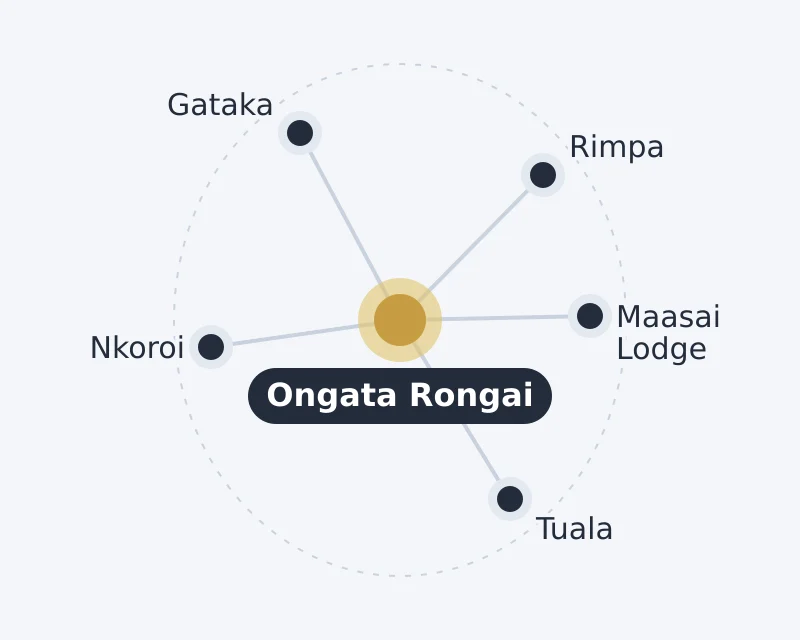
- Rimpa: close to Rongai, often with residential flats a little away from the main buzz.
- Maasai Lodge: further out, usually quieter with more space, but a longer commute.
- Nkoroi, Tuala and Gataka: covered above. Compare them on water, access roads and distance to the main road.
Whichever area you pick, check the same things: water, transport at rush hour and security.
Before you pay anything
- Never pay before viewing. Do not send rent, deposit or a "booking fee" for a house you have not seen.
- View the house in person. Check the water, the meter, the locks and the road, and meet the landlord or agent face to face.
- Find verified houses on ISHI Homes at homes.ishi.digital, where listings are checked before they go live.