
If you are house hunting in Nairobi or its commuter towns, you will meet agents who ask for money before you move in. Some want a viewing fee to show you a house. Others want a finder's fee after you get one. This guide explains how a viewing fee agent in Kenya should work, when a fee can be fair, and when it is a scam. At ISHI Homes we follow one simple rule: never pay before viewing.
What these fees mean
- Viewing fee: money an agent asks for to take you to see one or more houses. Some say it covers their time and transport.
- Finder's fee: money an agent asks for after you choose a house and agree to rent it. It is a reward for "finding" the house for you.
- Commission: payment to an agent for a deal. In most rentals, the landlord hires the agent and pays the commission, not the tenant.
A tenant is not always required to pay any of these. Many good houses, including those on ISHI Homes, can be viewed without paying anyone.

Why the stakes are high
Moving in already costs a lot. Here is what ISHI Homes listings across all areas show, as of 25 Oct 2026:
| House type | Median rent a month | Typical rent plus deposit |
|---|---|---|
| Bedsitter | KES 8,500 | KES 17,000 |
| 1 bedroom apartment | KES 15,750 | KES 31,500 |
| 2 bedroom apartment | KES 28,000 | KES 56,000 |
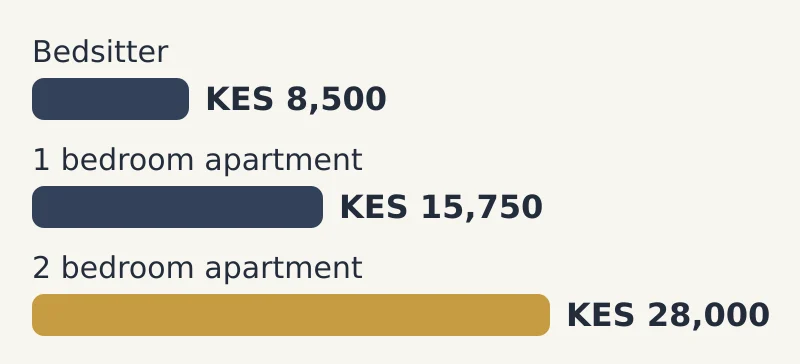
A fake agent does not only take a small viewing fee. Many push you to send the deposit and first month's rent too. That can mean losing KES 17,000 to KES 56,000 or more in one go.
When a fee can be legitimate
A fee is not automatically a scam. It may be fair when all of these are true:
- You meet the agent in person first. You see their face, their office or ID, and you go to the house together.
- The fee is small and agreed in advance. You know the exact amount before you go, and it does not change on the day.
- You pay on the day of the viewing, not before. You pay only after the agent actually shows up and takes you inside.
- You get a receipt. A real business gives a written or M-Pesa receipt in a business name.
- The agent is registered. In Kenya, estate agents should be registered with the Estate Agents Registration Board (EARB). Ask for their registration and check it.
- A finder's fee is in writing. If an agent asks for a finder's fee, it should be agreed before the search, written down, and paid only after you have signed a lease (your rental agreement) with the real landlord.
Even then, you can say no. If you do not want to pay, look for listings where viewing is free.
When it is a scam
Walk away if you see any of these signs:
- Pay first, see later. The agent wants M-Pesa money to "book" or "reserve" a viewing before you have met.
- Deposit before viewing. They ask for a deposit or rent to "hold" the house because "many people want it".
- Pressure and rush. "Pay in the next hour or you lose it." Real landlords give you time to think.
- Price too good to be true. Rent far below what similar houses in the area cost.
- No inside access. They show you the outside only, or say the caretaker has the keys and is away.
- Personal number only. Money goes to a private phone number, not a company paybill or the landlord's account.
- Fees keep growing. First a viewing fee, then a "form fee", then a "key fee", then an "agreement fee".
- You cannot meet or call the landlord. The agent blocks every attempt to confirm who owns the house.
- The same house, many agents. You see the same photos posted by different people at different prices.
One of these signs is enough to stop and check. Two or more, and you should leave.
ISHI's never-pay-before-viewing rule
On ISHI Homes, our advice to every house hunter is the same: do not send any money until you have stood inside the house. Not a viewing fee, not a booking fee, not a deposit.
This one rule stops most rental scams, because a scammer usually has no house to show. Once you are inside, you can also check the things photos hide: water pressure, damp, light, noise and security.
How to check before you pay a deposit
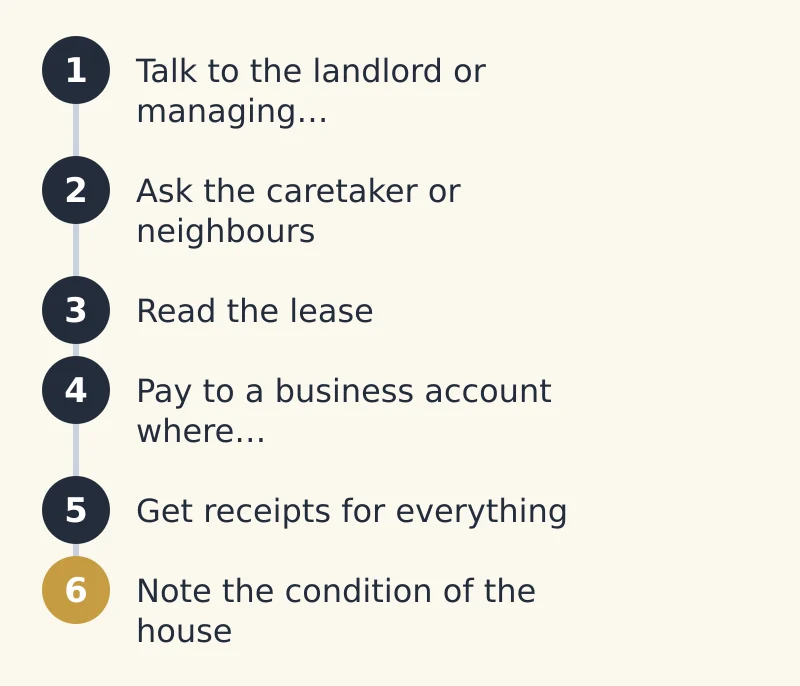
After the viewing, and before you pay rent or deposit:
- Talk to the landlord or managing company directly. Get their name and contact, and confirm the rent and deposit.
- Ask the caretaker or neighbours. They can confirm who owns the building and if the house is truly vacant.
- Read the lease. Check rent, deposit, notice period and who pays for water, garbage and repairs.
- Pay to a business account where possible. A company paybill or the landlord's bank account leaves a clear record.
- Get receipts for everything. Keep M-Pesa messages and written receipts safe.
- Note the condition of the house. Take photos on move-in day so you can get your deposit back later.
What to do if you have been scammed
- Save all messages, call logs and M-Pesa messages.
- Call Safaricom (or your mobile money provider) quickly and ask about reversing the transaction.
- Report to the nearest police station and get a reference number.
- Warn others by reporting the fake listing on the site where you found it.
Before you pay anything
- Never pay before viewing. No booking, viewing or holding fee before you see the house.
- View the house in person. Go inside, check it well, and confirm who the real landlord is.
- Find verified houses on ISHI Homes. Browse listings at homes.ishi.digital and view before you pay.