You found a house you like. The landlord or agent hands you a few pages to sign. Most people sign quickly and only read the agreement when there is a problem, which is too late. This guide walks you through a typical tenancy agreement in Kenya, one clause at a time, so you know what each part means and which lines should make you stop and ask questions.
A tenancy agreement (also called a lease or rental agreement) is the written deal between you and the landlord. It sets out what you pay, what you get, and how either side can end the deal.
Why a written tenancy agreement in Kenya matters
Many rentals still run on a verbal promise. That works until something goes wrong: the deposit is not returned, the rent goes up suddenly, or you are asked to leave in a week. A written agreement gives you proof of what was agreed.
Always ask for a written agreement and keep a signed copy. A photo on your phone is better than nothing, but a full signed copy is best.
Before you read: check who you are dealing with
Before looking at the clauses, confirm the basics:
- Who owns the house? Ask the landlord or agent to show proof they own or manage the property. An agent should be able to show a letter or contract from the owner.
- Names match IDs. The names on the agreement should match the national ID of the person signing for the landlord, and yours.
- Correct address. The house number, building and area should be clear, so there is no doubt which unit you are renting.
Red flag: the person collecting money cannot show any link to the owner, or refuses to put their full name on the agreement.
The clauses that matter, one by one
1. Rent amount and due date
This clause says how much rent you pay, when it is due (for example by the 5th of each month) and how to pay.
Check that:
- The amount is written in figures and words, for example "KES 15,000 (fifteen thousand shillings)".
- The payment method is clear: a paybill, a bank account or another official channel.
- You will get a receipt or confirmation for every payment.
Red flag: you are asked to send rent to a personal phone number that changes, or to pay in cash with no receipt.
2. Deposit
A deposit is money you pay at the start and should get back when you leave, less the cost of any damage you caused or rent you owe.
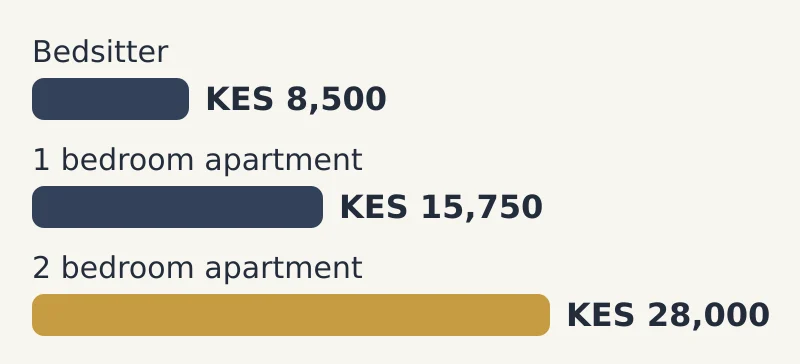
On ISHI Homes, most listings ask for one month's rent as deposit. As of 25 Oct 2026, for example:
| House type | Median rent | Typical rent plus deposit |
|---|---|---|
| Bedsitter | KES 8,500 | KES 17,000 |
| 1 bedroom apartment | KES 15,750 | KES 31,500 |
| 2 bedroom apartment | KES 28,000 | KES 56,000 |
Some higher-end areas ask for more. In Kilimani, a 2 bedroom apartment had a median rent of KES 71,500, with typical rent plus deposit of KES 214,500 (two months' deposit), as of 25 Oct 2026.
The agreement should say:
- How much the deposit is.
- What it can be used for (damage beyond normal wear and tear, unpaid rent or bills).
- How long after you move out it will be returned.
"Normal wear and tear" means the small, natural ageing of a house from everyday living, like slightly faded paint. You should not pay for that.
Red flags:
- The deposit is "non-refundable".
- The agreement says you cannot use the deposit as last month's rent but gives no timeline for its return.
- There is no mention of a move-in inspection.
Tip: on move-in day, take dated photos and videos of every room, including walls, floors, taps, sockets and doors. Share them with the landlord by message so there is a record.
3. Length of the tenancy
This clause says whether the tenancy is for a fixed period (for example 12 months) or runs month to month until someone gives notice.
- Fixed term: you agree to stay for a set time. Leaving early may cost you, so read the early exit terms.
- Periodic (month to month): continues each month until either side gives notice.
Red flag: a long fixed term with a heavy penalty for leaving early, such as paying all remaining months.
4. Rent increases
Look for how and when the rent can go up.
A fair clause says how much notice you will get before an increase (in writing) and how often rent can be reviewed, for example once a year.
Red flags:
- "The landlord may increase rent at any time."
- No notice period for increases.
- A fixed term agreement that still allows increases in the middle of the term without your consent.
5. Water, electricity and service charge
This is where hidden costs often sit. Check:
- Water: is it included, shared, or on your own meter? How is the bill split if shared?
- Electricity: is it on your own token meter?
- Service charge: a monthly fee for things like security, cleaning, garbage collection or a caretaker. It should be listed with the amount.
Red flag: vague words like "other charges as may be applicable" with no amounts. Ask for a full list of monthly costs in writing.
6. Repairs and maintenance
Who fixes what? A clear clause usually splits it like this:
| Usually the landlord | Usually the tenant |
|---|---|
| Roof, walls, structure | Bulbs and small fittings |
| Plumbing and major leaks | Damage you or your guests cause |
| Wiring and electrical faults | Keeping the house clean |
| Common areas | Blocked drains caused by misuse |
The clause should also say how you report a problem and how quickly the landlord will act.
Red flag: "The tenant is responsible for all repairs." That shifts the landlord's costs onto you.
7. Ending the tenancy and notice
This clause says how much notice each side must give before the tenancy ends. For month to month rentals, one month's written notice is common.
Check that:
- The notice period is the same, or fair, for both sides.
- Notice must be in writing.
- It says what happens to your deposit when you leave.
Red flags:
- The landlord can end the tenancy with very short notice while you must give a long one.
- The landlord can "lock the house", remove the door or take your things if rent is late. Ask about this directly; do not accept it.
8. Landlord's entry to the house
The landlord may need to enter for repairs or inspections. A fair clause says they will give reasonable notice first, except in an emergency like a burst pipe or fire.
Red flag: the landlord or caretaker can enter "at any time" without telling you.
9. Use of the house, guests and subletting
This covers what you can and cannot do:
- Use: living only, or can you run a small business from home?
- Guests: limits on long-stay visitors.
- Pets: allowed or not.
- Subletting: renting out all or part of the house to someone else. Usually needs written permission.
- Changes: painting, drilling or fixing shelves.
Red flag: rules so strict they are hard to live with, such as no visitors at all, combined with eviction for any breach.
10. Late payment and penalties
Some agreements charge a fee if rent is late.
Check that the fee is a clear, reasonable amount and that there is a short grace period (a few days after the due date before a penalty applies).
Red flag: a daily penalty that grows without limit, or a penalty larger than the rent itself.
11. Signatures and copies
The last page should have:
- Signatures of both you and the landlord or authorised agent.
- Dates.
- Ideally, witnesses.
Every page should be initialled so pages cannot be swapped. Keep your own signed copy.
Red flag: you are told to sign now and "the landlord will sign later", or you are not given a copy.
Quick red flag checklist

| Red flag | What to do |
|---|---|
| Rent to a personal or changing number | Ask for an official paybill or bank account |
| Non-refundable deposit | Ask to remove it or walk away |
| Rent can rise "at any time" | Ask for written notice and a yearly review |
| Tenant does all repairs | Ask for a fair split in writing |
| Landlord can lock you out | Do not accept this clause |
| Entry without notice | Ask for a notice clause |
| Blank spaces or missing pages | Fill or cross out before signing |
| No copy for you | Do not pay until you get one |
Questions to ask before you sign
- What is the total I pay to move in, and what is each amount for?
- What are all the monthly costs besides rent?
- How and when will I get my deposit back?
- Who do I call for repairs, and how fast do they respond?
- How much notice do I give, and how much do you give?
If an answer changes something in the agreement, ask for it to be written in and initialled by both of you.
Before you pay anything
- Never pay before viewing. No booking fee, deposit or rent until you have seen the house.
- View the house in person. Photos and videos can be old or fake. Visit, check the rooms, the water and the meters, and meet the landlord or agent.
- Find verified houses on ISHI Homes. Browse listings at homes.ishi.digital to compare rents and find houses that have been checked.