
Need a new home fast? This guide shows you how to find a house in Nairobi in seven days. Each day has one clear job: budget, search, shortlist, area walk, viewings, checks and payment. Follow it in order and you will avoid most rushed mistakes.
Day 1: Set your budget and your must-haves
Start with money, not photos.
Know your move-in cost. Most landlords ask for the first month's rent plus a deposit (money the landlord keeps until you move out, then returns if there is no damage or unpaid bills). The deposit is often one month's rent, but some ask for two or more.
Here is what houses cost on ISHI Homes across all areas, as of 25 Oct 2026:
| House type | Median rent a month | Typical rent plus deposit |
|---|---|---|
| Bedsitter | KES 8,500 | KES 17,000 |
| 1 bedroom apartment | KES 15,750 | KES 31,500 |
| 2 bedroom apartment | KES 28,000 | KES 56,000 |
| 3 bedroom house | KES 45,000 | KES 90,000 |
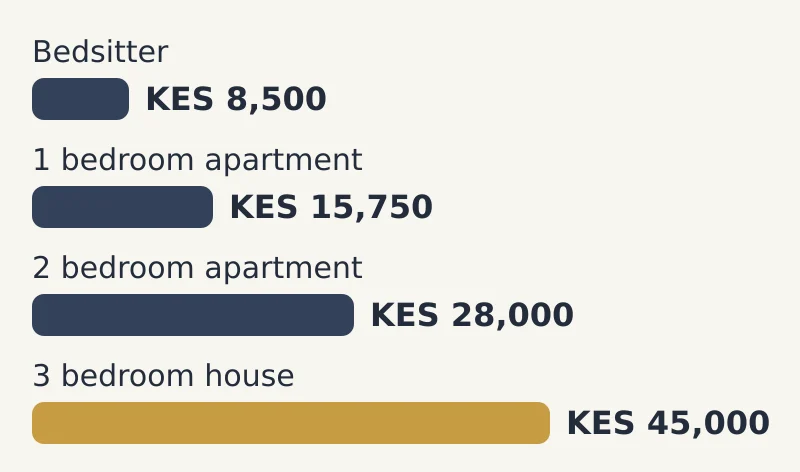
"Median" means the middle price: half the houses cost less, half cost more. These figures come from a small number of listings, so treat them as a guide.
Also set aside money for:
- Moving (truck or pickup, helpers)
- Water and electricity deposits, if the house asks for them
- Basic items like curtains, gas and cleaning
Write your must-haves. Keep the list short, for example:
- Number of rooms
- Highest rent you can pay
- Longest commute you can accept
- Reliable water
- Parking, if you drive
Anything else is a nice-to-have.
Day 2: Pick two or three areas and search online
Choose areas that fit your budget and commute. Prices change a lot between areas. On ISHI Homes, as of 25 Oct 2026:

| Area | Bedsitter | 1 bedroom | 2 bedroom |
|---|---|---|---|
| Toll (Ruiru) | KES 7,750 | KES 12,500 | KES 21,250 |
| Kahawa Wendani | KES 8,500 | KES 13,250 | - |
| Kahawa Sukari | KES 10,000 | KES 15,750 | KES 25,000 |
| Roysambu | KES 12,000 | KES 18,250 | KES 30,000 |
| Kilimani | - | - | KES 71,500 |
These are median monthly rents from only a few listings in each area. In Kilimani, the typical move-in cost for a 2 bedroom was KES 214,500, about three months' rent, so expect bigger deposits in higher-end areas.
Now search. Use ISHI Homes and filter by area, house type and price. Save every house that meets your must-haves. Aim for 10 to 15.
Day 3: Shortlist and contact landlords or agents
Cut your list to the best 5 to 8 houses. Then call or message each one. Ask:
- Is the house still available?
- What is the rent, and how much is the deposit?
- Are water, garbage and security included, or extra?
- How is electricity paid (token meter or monthly bill)?
- How often does water run, and is there a tank?
- Are there any other fees?
- When can I view it?
Book viewings for Day 5, grouped by area so you do not waste time and fare. Be careful if anyone asks for a "viewing fee" or a booking fee before you have seen the house.
Day 4: Walk the area
Photos cannot show you a neighbourhood. Spend this day walking your top area, or two areas if they are close.
Check:
- Commute: Try the trip to work or school at the time you would normally travel. Note the cost and how long it takes.
- Roads: Are they passable when it rains?
- Shops and services: Where would you buy food, see a doctor or take children to school?
- Noise: Bars, churches, garages or busy roads nearby?
- Safety: Is the street lit at night? How do people move around after dark?
- Water: Ask shopkeepers and boda boda riders how often taps run dry. Locals tell the truth.
If you can, pass by once in the evening as well. An area can feel very different after dark.
Day 5: Do your viewings
Always view in person. Take a friend if you can, and use your phone to take photos and notes.
In each house, check:
- Open every tap and flush the toilet
- Switch on lights and test sockets
- Look for damp, cracks and mould on walls and ceilings
- Check doors, windows and locks
- Look at the kitchen and bathroom fittings
- Check phone signal and ask about internet
- Note the gate, guard and lighting in the compound
Talk to a neighbour or the caretaker. Ask how the landlord handles repairs and how the water situation really is.
Score each house from 1 to 5 before you leave. By evening, pick your top two.
Day 6: Check the paperwork and negotiate
Go back to your favourite house, or call the landlord, and confirm the details.
Confirm who owns the house. Ask for the landlord's or agency's name and contact. Confirm with the caretaker or neighbours that this person really manages the building.
Ask for the tenancy agreement. This is the written contract between you and the landlord. Read it before you pay. Check:
- Rent amount and the date it is due
- Deposit amount and how it is returned
- Notice period (how many days' warning you must give before moving out)
- Rent increase rules
- Who pays for which repairs
Negotiate politely. You can ask for a lower rent, a smaller deposit, repairs done before you move in, or a later rent date. If the house has been empty for a while, the landlord may agree.
Day 7: Pay safely and plan your move
Once you are sure:
- Pay to a bank account, company paybill or till in the landlord's or agency's name, not to a random personal number
- Get a receipt for every payment
- Sign the tenancy agreement and keep a copy
- Take photos of the house on move-in day as proof of its condition
- Book your mover and set your moving date
That is it. Seven days, one home.
Before you pay anything
- Never pay before viewing. No deposit, booking fee or rent until you have seen the house.
- View the house in person. Photos and videos can be old or fake. Stand inside the house yourself.
- Use verified listings. Find verified houses on ISHI Homes and start your search today.