House scams in Nairobi cost tenants their deposits every month. The conmen are often friendly, quick to reply and good with photos. Most of them use the same few tricks. This guide covers 10 of them and gives you one simple check for each, so you can tell a real house from a trap.
Why house hunters get caught
Conmen know three things about you:
- You are in a hurry, often because your notice period is running out.
- Good houses at fair prices go fast.
- Viewing many houses costs you time and fare.
Every trick below uses one of these pressures. Slow down and the trick usually falls apart.
Know the normal price first
A price far below the area's normal rent is the biggest warning sign. Here is what houses listed on ISHI Homes cost, as of 25 Oct 2026. "Rent plus deposit" is the typical amount you pay to move in. These figures come from a small number of listings, so use them as a rough guide only.
| Area | House type | Median rent a month | Typical rent plus deposit |
|---|---|---|---|
| Kahawa Wendani | Bedsitter | KES 8,500 | KES 17,000 |
| Toll (Ruiru) | 1 bedroom | KES 12,500 | KES 25,000 |
| Kahawa Sukari | 2 bedroom | KES 25,000 | KES 50,000 |
| Roysambu | 1 bedroom | KES 18,250 | KES 36,500 |
| Roysambu | 2 bedroom | KES 30,000 | KES 60,000 |
| Kilimani | 2 bedroom | KES 71,500 | KES 214,500 |
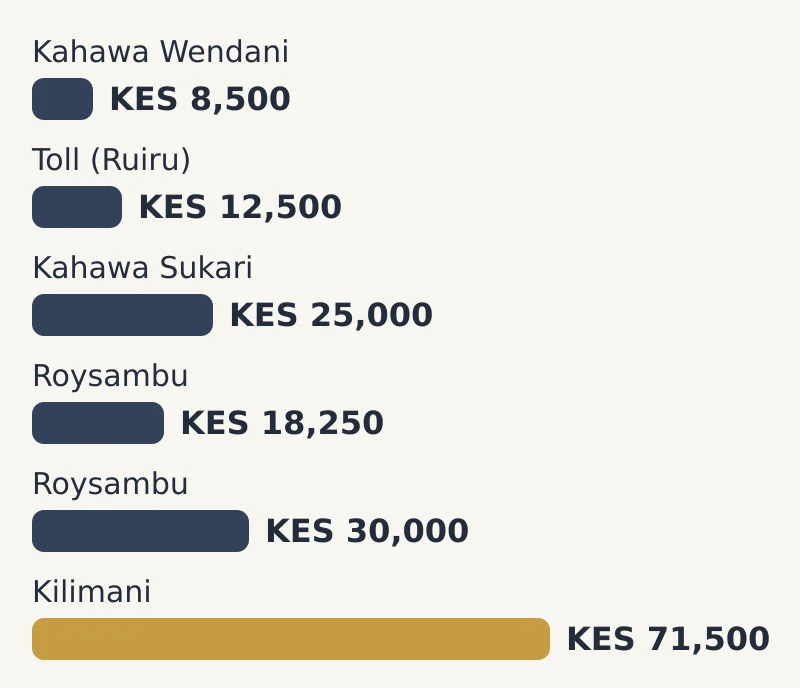
"Median" means the middle price: half the houses cost less, half cost more.
10 tricks conmen use (and how to check each one)
1. The viewing fee
The "agent" asks you to send KES 500 or KES 1,000 on M-Pesa before he shows you the house. After you pay, he stops picking your calls. Some do this to dozens of people a day.
How to check: Ask to view first and pay any viewing or agent fee only after you have seen the house, if at all. Agree on any fee in writing (an SMS is enough) before you meet. If they refuse to meet without money first, walk away.
2. Stolen photos
The conman copies photos from a real listing, a hotel or a house in another town, then posts them with his own number.
How to check: Do a reverse image search. On your phone, open Google Lens or Google Images and upload the photo. If the same photos show up under a different name, area or price, it is fake. Also ask for a short live video call of the house, with today's newspaper or a note with your name in view.
3. Rent that is too good to be true
A 2 bedroom in Kilimani for KES 20,000. A furnished 1 bedroom in Roysambu for KES 8,000. The low price is the hook to get you excited and stop you thinking.
How to check: Compare with the table above or with other listings in the same area. If a house is much cheaper than similar ones nearby, ask why. A real landlord can explain (for example, no parking or an older building). A conman just says "you are lucky".
4. The landlord who is "abroad"
The "owner" says she is in the UK or the US. She cannot show you the house, but will "send the keys" once you pay the deposit.
How to check: Never pay for a house you have not entered. A real landlord abroad will have a caretaker, agent or relative in Nairobi who can let you in. If nobody can open the door for you, there is no deal.
5. The fake caretaker
Someone shows you a real, empty house. He has the key, maybe because he once worked there, or is a watchman. He takes your deposit, but he has no right to rent the house out.
How to check: Ask other tenants in the building who the landlord or managing agent is. Call that person yourself on a number you got from the tenants or the building notice, not from the "caretaker". Confirm the house is vacant and the rent amount.
6. The same house rented to many people
One house is "rented" to five or ten people in one week. Each pays a deposit. On moving day, everyone arrives with a lorry, and the conman is gone.
How to check: Pay into the landlord's or agency's official account, not a personal number. Get a signed tenancy agreement (the written contract between you and the landlord) and a receipt. Ask the landlord or agent to confirm, by phone, that the house is now off the market.
7. "Pay now, others are waiting"
The agent says three other people are coming this afternoon, so you must send a "booking fee" right now to hold the house.
How to check: Pressure is a warning sign by itself. A real landlord will usually give you a few hours to confirm details. If you do want to hold a house, pay only after you have viewed it, met the landlord or verified agent, and got a written receipt that says what the money is for and whether it is refundable.
8. The wrong name on M-Pesa
The agent calls himself "Brian from ABC Properties", but when you enter the number in M-Pesa, it shows a different name. Or he asks you to send money to his "cousin".
How to check: Before you press OK, read the name M-Pesa shows. It should match the landlord or the company. Companies usually use a Paybill or Till number that shows the business name. If the name does not match, cancel.
9. Fake documents
The conman shows you a tenancy agreement on company letterhead, a business card and even a stamp. All can be made in an hour at a printing shop.
How to check: Look up the agency yourself. Find its office, call its main number and visit if you can. Ask whether the person you met works there. You can also ask if the agent is registered with the Estate Agents Registration Board. If you have serious doubts about who owns the property, a land search at the Ministry of Lands can show the registered owner.
10. The "registration fee" house hunting agency
An office charges you a "registration" or "membership" fee, promising to show you many vacant houses. You then get a list of old, taken or non-existent houses, and no refund.
How to check: Ask what exactly the fee pays for and get it in writing. Ask to see one house before paying. Search the agency's name online together with words like "scam" or "complaints" and read what others say.
Quick checklist
| Warning sign | What to do |
|---|---|
| Money asked before viewing | Refuse. View first. |
| Price far below the area | Ask why, compare listings |
| Owner cannot meet or open | Walk away |
| M-Pesa name does not match | Cancel the payment |
| Pressure to pay now | Slow down, verify |
| No receipt or agreement | Do not pay |
If you have already been conned
- Report at the nearest police station and get an OB number (the reference number for your report).
- Call Safaricom straight away to ask about reversing the payment, and give them the transaction code.
- Keep all SMS, call logs, screenshots and ads.
- Report the ad to the website or social media page where you found it, so others are warned.
Before you pay anything
- Never pay before viewing. Not a viewing fee, not a booking fee, not a deposit.
- View the house in person. Walk in, open the taps, talk to the neighbours, and meet the landlord or a verified agent.
- Find verified houses on ISHI Homes. Search listings across Nairobi and its commuter towns at homes.ishi.digital and start your search with houses that have been checked.