A house can look perfect in photos and still have weak water pressure, no phone signal or a noisy bar next door. This house hunting checklist for Kenya lists 30 things to check when you view a rental, so you find problems before you sign, not after you move in.
Print it or keep it on your phone. Tick each item as you go.
How to use this checklist
- Visit twice if you can. Go once in the day to check light and water. Go once in the evening to check security, lighting and noise.
- Take a friend. A second person notices what you miss.
- Carry your phone charger and a tape measure. You will use both.
- Take photos of anything broken or damaged.
Water (1 to 5)
- [ ] Turn on every tap and the shower. Is the pressure strong? Check carefully on upper floors, where pressure is often weaker.
- [ ] Ask how often water comes. Is it every day or on certain days? Is there a storage tank, and can you see it?
- [ ] Ask where the water comes from. Is it county supply, a borehole or a water truck? Who pays when it runs out?
- [ ] Look at and smell the water. It should be clear with no strong smell. Ask if borehole water is salty or hard (leaves white marks).
- [ ] Flush every toilet and look under sinks. Check for leaks, wet patches and slow drains.
Power and network (6 to 10)
- [ ] Find the electricity meter. Is it prepaid (tokens) and is it only for your house? A shared meter can cause fights over bills.
- [ ] Test the sockets and lights. Plug in your charger in each room. Switch on every light.
- [ ] Check phone signal in every room. Make a short call from the bedroom and the bathroom, not just near the door.
- [ ] Ask which internet providers serve the building. If you work from home, confirm fibre or home internet is already connected or can be installed.
- [ ] Ask about power cuts. How often do they happen? Is there backup for the water pump and the stair lights?
Sunlight and air (11 to 14)
- [ ] Check the sunlight. Do rooms get natural light during the day, or do you need lights on at noon?
- [ ] Look for damp and mould. Check corners, behind wardrobes and bathroom ceilings for black spots, peeling paint or a musty smell.
- [ ] Open and close every window. Do they lock? Does the kitchen and bathroom have enough air flow?
- [ ] Ask where you will dry clothes. Is there a balcony, rooftop or drying line?
Security (15 to 20)
- [ ] Check the gate and guard. Is there a guard, and what hours do they work? Who holds keys to the gate?
- [ ] Test the door locks. Is there a strong main door or metal grill? Ask if locks are changed between tenants.
- [ ] Check the lighting at night. Are the compound, stairs and corridors lit?
- [ ] Walk from the main road or stage in the evening. Is the path lit and busy? Ask a neighbour or shopkeeper how safe the area feels.
- [ ] Ask about CCTV and visitor records. Are visitors signed in at the gate?
- [ ] Check fire safety. Is there a fire extinguisher? Can window grills be opened from inside in an emergency? Is there a second way out?
Noise and neighbours (21 to 23)
- [ ] Look around for noise sources. Bars, clubs, churches, busy roads, garages and building sites. Visit in the evening or on a weekend if you can.
- [ ] Listen inside the house. Can you hear neighbours through walls or the floor above?
- [ ] Ask about house rules. Are there rules on visitors, parties, pets or music?
Inside the house (24 to 27)
- [ ] Check the kitchen. Is there space for a fridge and gas cooker? Do cabinets close? Does the sink drain well?
- [ ] Measure the rooms. Will your bed, sofa and wardrobe fit? Is there built-in storage?
- [ ] Look up at the ceiling. Brown stains mean the roof leaks. Ask what happens in the rainy season.
- [ ] Ask about garbage and parking. How often is rubbish collected and who pays? Is there parking, and is it extra?
Money and paperwork (28 to 30)
- [ ] Get the full move-in cost in writing. This includes rent, deposit (money held to cover damage, refunded when you leave), water deposit, service charge and any agent fee.
- [ ] Confirm who you are dealing with. Meet the landlord or agent in person. Ask for ID and proof they manage the house. Pay only to an account in the landlord's or company's name, and get a receipt.
- [ ] Read the tenancy agreement before signing. Check the notice period (how early you must say you are leaving), rent increase rules, repairs and how the deposit is refunded. Take dated photos of the house on move-in day.
How much to budget for moving in
Most landlords ask for one month's rent plus a deposit before you get the keys. Here are typical figures from ISHI Homes listings across all areas, as of 25 Oct 2026:
| House type | Median rent a month | Typical rent plus deposit |
|---|---|---|
| Bedsitter | KES 8,500 | KES 17,000 |
| 1 bedroom apartment | KES 15,750 | KES 31,500 |
| 2 bedroom apartment | KES 28,000 | KES 56,000 |
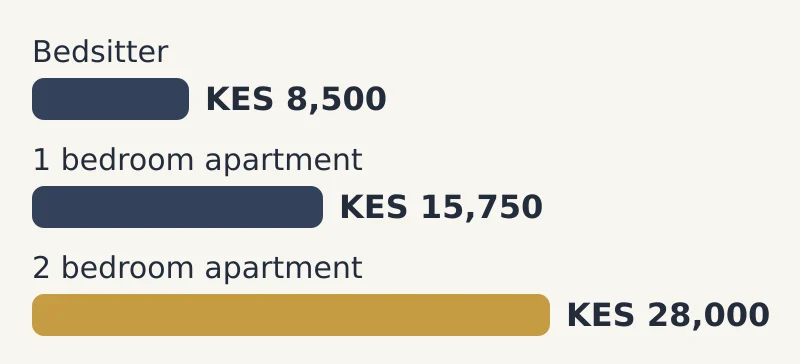
These are based on a small number of listings (8 to 10 per type), so treat them as a guide. Some areas ask for more. In Kilimani, a 2 bedroom apartment had a median rent of KES 71,500 and a typical rent plus deposit of KES 214,500, as of 25 Oct 2026, which is about three months' rent upfront. Always ask before you go.
Also keep money aside for transport, a gas cylinder, curtains and the first electricity tokens.
Before you pay anything
- Never pay before viewing. No booking fee, no deposit, no "viewing fee" for a house you have not seen.
- View the house in person. Photos and videos can be old or fake. Use this checklist on the spot.
- Start with verified houses. Find verified rentals in Nairobi and commuter towns on ISHI Homes.