Looking for houses to rent in Ngong? Ngong is a busy town on the edge of Nairobi, below the famous Ngong Hills. It is cooler and greener than much of the city, and rents are often lower than in estates closer to town. This guide covers what living in Ngong is like day to day, so you can decide if it fits you.
Ngong at a glance
- Where it is: South-west of Nairobi, at the far end of Ngong Road, near the Ngong Hills.
- Feel: A real town with its own market, shops and matatu stage, plus quieter estates around it.
- Climate: Cooler than central Nairobi, especially in the mornings and evenings. Bring warm clothes and bedding.
- Housing: A mix of bedsitters, one and two bedroom flats, and standalone houses and maisonettes in the estates.
- Rent: ISHI Homes has no published Ngong listings yet (as of 26 Oct 2026), so we do not quote rent figures here. Live houses will appear on the Ngong area page on ISHI Homes as agencies list them.
Who Ngong suits, and who it does not
Ngong may suit you if you:
- Want more space or a compound for less than you would pay closer to town.
- Like fresh air, cooler weather and views of the hills.
- Work in Karen, Lang'ata, Kilimani or along Ngong Road.
- Enjoy hiking or the outdoors at weekends.
Ngong may not suit you if you:
- Must be in the CBD or on the east side of Nairobi early every day and hate long commutes.
- Need a very reliable piped water supply with no backup.
- Want nightlife and malls right on your doorstep.
Getting around
Most people commute along Ngong Road, the main route into Nairobi. Matatus run from Ngong town towards the city through the day. Traffic can be heavy at peak hours, especially near Karen and closer to town.
The Southern Bypass gives drivers another way to reach other parts of Nairobi without going through the city centre. It can save time for some trips, but check the route you would actually use.
Tips before you choose a house:
- Do the commute yourself at the time you would travel to work, both ways.
- Ask how far the house is from the main road and the matatu stage. Some estates need a boda boda or a walk on rough roads.
- In the rainy season, check if the access road becomes muddy or flooded.
Water and power
Water is the big question in many parts of Ngong. Supply can depend on the estate and even the building.
Ask the landlord or agent:
- Is the house on a piped supply, a borehole, or both?
- How many days a week does water come?
- Is there a storage tank, and how big is it?
- Do tenants pay for water separately, and how is it billed?
- Do people buy water from vendors in dry months?
For power, most houses use Kenya Power prepaid tokens. Ask if the house has its own meter or shares one, and how often power goes off. Turn on taps and switches during your viewing.
Safety
Like any growing town, safety varies by estate and street. Do not rely on one opinion.

- Visit during the day and again in the evening.
- Check for a gate, fence, lighting and a caretaker or guard.
- Ask neighbours and shopkeepers how the area feels at night.
- Look at how far you would walk from the stage after dark.
Shopping and daily life
Ngong town has an open-air market, shops, supermarkets, banks, M-Pesa agents and eateries. The market is good for fresh, affordable produce. For bigger malls and more choice, many residents head towards Karen or other parts of Nairobi.
Weekends are a big draw. The Ngong Hills are popular for hiking, and the area has a relaxed, small-town pace compared with the city.
Schools and health
There are public and private schools and clinics in and around Ngong. Quality and fees vary a lot, so:
- Visit schools yourself and ask about fees, transport and term dates.
- Find the nearest clinic and the nearest hospital with emergency services before you move.
- Check how long the school run takes in morning traffic.
Internet
Home fibre and mobile data are available in many parts of Ngong, but coverage changes from estate to estate. Before you sign:
- Ask the landlord which internet providers already serve the building.
- Check your phone signal inside the house, not just outside.
- If you work from home, confirm fibre can be connected before you move.
Pros and cons of living in Ngong
| Pros | Cons |
|---|---|
| Cooler, greener and quieter than the city | Ngong Road traffic at peak hours |
| Often more space for your money | Water supply can be unreliable in some estates |
| Hills and outdoor life nearby | Some access roads are rough, especially in rain |
| Busy town with a market and daily needs | Bigger malls and offices are a trip away |
Nearby alternatives to compare
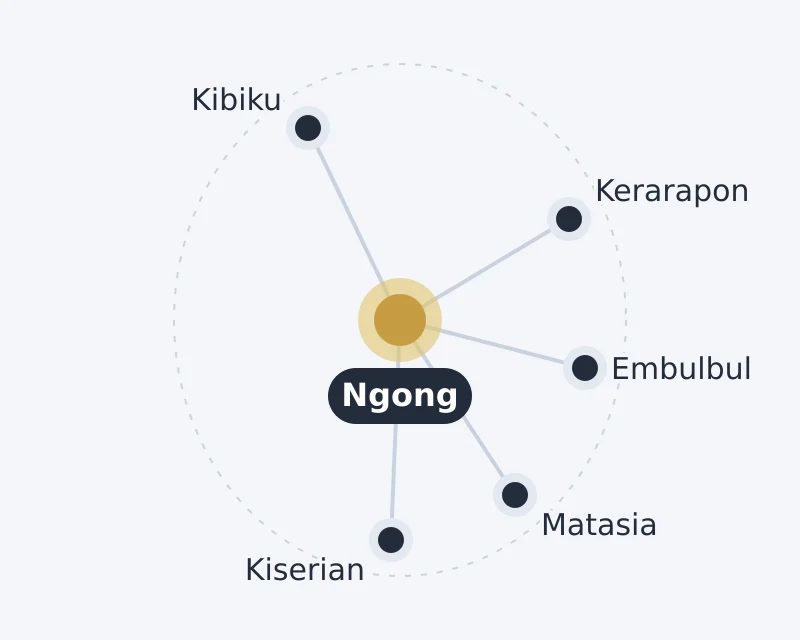
If Ngong is not quite right, look at the estates around it:
- Embulbul: Close to Ngong, with many newer flats and houses. Check water and road access.
- Kerarapon: Quieter and greener, nearer Karen. Often more standalone homes.
- Kibiku: A quieter area near Ngong town. Check how far you are from transport.
- Kiserian: Further along, a town of its own on the way to Magadi. Can be more affordable but the commute is longer.
- Matasia: Between Ngong and Kiserian, with a mix of houses. Ask about water and roads.
Compare each one by doing the commute, checking water and visiting at night.
Before you pay anything
- Never pay before viewing. Do not send a deposit or "booking fee" for a house you have not seen.
- View the house in person. Meet the landlord or agent at the house, check taps, switches, locks and the meter, and confirm who owns the property.
- Find verified houses on ISHI Homes. Browse listings at homes.ishi.digital and check the Ngong area page as new houses are added.