If you are looking for houses to rent in Nairobi CBD, you are probably after one thing: being close to everything. Living in town can save you hours of travel each week. But it also comes with noise, crowds and fewer homes to choose from. This guide helps you decide if the CBD is right for you, and what to check before you sign.
Nairobi CBD at a glance
- Type of homes: Mostly flats in older and mixed-use buildings, often with shops or offices on the lower floors. Standalone houses are rare.
- Rent: ISHI Homes has no published listings for Nairobi CBD yet (as of 26 Oct 2026), so we do not quote rents here. Live houses appear on the Nairobi CBD area page as agencies list them.
- Best for: People who work in or near town and want to walk to work.
- Main trade-off: Convenience versus noise, crowds and limited space.
Who living in Nairobi CBD suits, and who it does not
It suits you if you:
- Work in town or near it and want to cut travel time and fare.
- Are single, a couple, or a student who needs little space.
- Work late or early shifts and want to avoid long trips at odd hours.
- Like having shops, banks and services a short walk away.
It may not suit you if you:
- Have young children and need play space or a quiet compound.
- Need parking for a car. Parking in town is limited and can be costly.
- Are a light sleeper. Town can be loud from early morning to late night.
- Want a garden, a big kitchen or extra rooms.
Getting around
The CBD is the centre of Nairobi's public transport. Matatus and buses to most parts of the city start or pass through town, so you rarely need more than one vehicle to get anywhere.
Within town, walking is often the fastest way to move. Traffic is heavy at rush hour, so a short distance by car can take a long time.
What to check:
- How far the flat is from the stage you will use most.
- Whether the street is easy and safe to walk on at night.
- If you drive, whether the building has parking and what it costs.
Water and power
Water supply in parts of Nairobi can come on a schedule, and older buildings may have weak pressure on upper floors. Ask direct questions before you move in.

- Does the building have a storage tank, and how big is it?
- Is there a pump to push water to upper floors?
- How many days a week does water usually come?
- Is water paid separately or included in rent?
For power, ask whether each flat has its own prepaid meter (a token meter where you buy units in advance). A shared meter can lead to arguments over bills. Also ask if the building has a backup generator for lifts and security lights.
Safety
Safety in town depends a lot on the exact street and building. Do not judge the whole CBD by one story you heard.
What to look for:
- A guard or caretaker at the entrance, day and night.
- A locked gate or door that only tenants can open.
- Good lighting on the stairs and corridors.
- Working fire exits and fire extinguishers. Older buildings can be crowded, so this matters.
Visit the street in the evening as well as the day. A place that feels busy and safe at noon can feel very different after shops close. Keep your phone and bag close in crowded areas.
Noise and space
Noise is the biggest complaint about living in town. Expect traffic, hooting, music from shops and people moving around early and late. Flats facing the main road are usually loudest. Higher floors and units facing the back of the building are often quieter.
Many CBD flats are small, with little natural light in some older buildings. Check for windows, airflow and space to dry clothes.
Shopping and daily life
This is where the CBD shines. Supermarkets, markets, banks, chemists, restaurants and government offices are all close. You can run most errands on foot in one trip.
Food and household goods are easy to find at many price levels. The downside is that weekends can feel quieter, and some shops close early on Sundays.
Schools and health
There are clinics, chemists and hospitals in and around town, so getting health care is usually quick. For schools, many families who live in town send children to schools in nearby areas.
If you have children, list the schools you are considering and check:
- How long the daily trip would take.
- Whether the school offers transport from town.
- School fees and term dates directly with the school.
Internet
Mobile data coverage is generally strong in town. Many buildings can also get home fibre internet, but not all. Before you sign, ask the caretaker which internet providers already serve the building, and test your phone signal inside the flat.
Pros and cons of living in Nairobi CBD
| Pros | Cons |
|---|---|
| Walk to work and save on fare | Noise day and night |
| Transport to almost anywhere | Crowds and heavy traffic |
| Shops and services close by | Small flats, few family homes |
| Easy for late or early shifts | Limited and costly parking |
| Quick access to health care | Water pressure can be weak in older buildings |
Nearby alternatives to compare
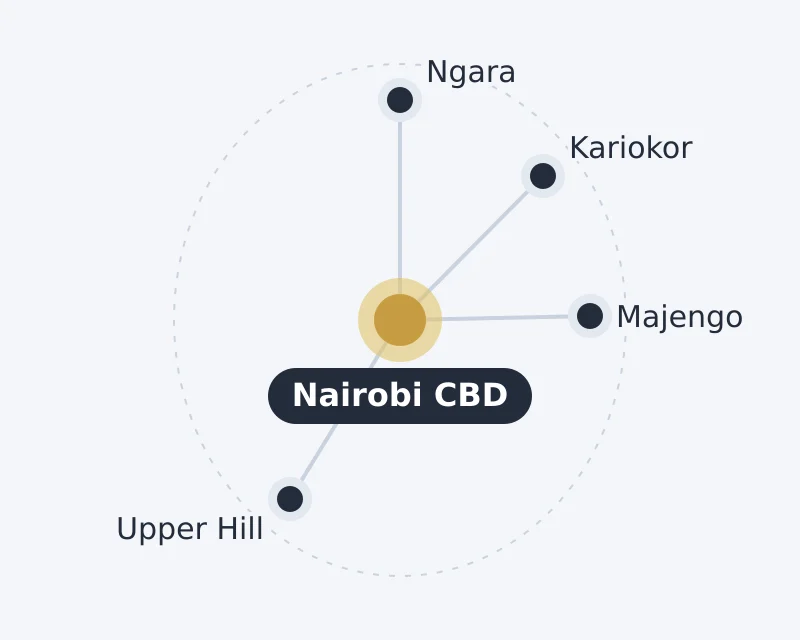
If the CBD feels too busy, these nearby areas keep you close to town with a different feel. Visit each one and compare.
- Ngara: Close to town with many apartment blocks. Worth checking if you want to walk or take a short ride into the CBD.
- Kariokor: A busy, older area near town. Compare building condition, water and security carefully.
- Majengo: One of Nairobi's older neighbourhoods, close to the centre. Homes vary a lot, so view several before deciding.
- Upper Hill: Known for offices and newer apartments. Often suits professionals who want more modern buildings, though rents may be higher.
For each area, check the same things: travel time to your work, water, security, noise and what is included in rent.
Before you pay anything
- Never pay before viewing. Do not send a deposit, booking fee or rent for a house you have not seen.
- View the house in person. Photos can hide problems. Check water, power, locks and the street yourself, and meet the landlord or agent.
- Use verified listings. Find verified houses to rent on ISHI Homes at homes.ishi.digital, and check the Nairobi CBD area page as new houses are listed.