Karen is one of Nairobi's best-known upmarket areas. People look for houses to rent in Karen because of the space: bigger plots, gardens, trees and a quieter pace than most of the city. This guide covers what living in Karen is really like, so you know what to check before you view a house.
Karen at a glance
| Item | What to expect |
|---|---|
| Type of homes | Mostly standalone houses and townhouses, often with gardens. Fewer flats than most Nairobi areas. |
| Feel | Green, quiet and spread out |
| Getting around | Easiest with a car. Public transport serves the main roads. |
| Water | Many homes use a mix of county supply, boreholes and storage tanks. Ask at each house. |
| Rent on ISHI Homes | No Karen listings published yet, as of 26 Oct 2026. Live houses appear on the Karen area page as agencies list them. |
Because we do not have verified rent figures for Karen yet, we will not quote prices here. Check the area page on ISHI Homes for current houses and their rents.
Who Karen suits, and who it does not
Karen suits you if you:
- Want space, a garden and room for children or pets
- Own a car or can budget for daily taxis
- Work from home, or near Karen and the south-west of Nairobi
- Prefer quiet evenings to a busy nightlife
Karen may not suit you if you:
- Rely fully on matatus and walking
- Need to be in the city centre or east of Nairobi every day
- Are on a tight budget, since big houses also mean bigger bills for water, power, security and gardening
Getting around
Karen is spread out. Homes often sit down long private roads, away from where matatus stop. That is why most residents drive.
Before you rent, check:
- Your daily trip. Do the drive or ride at the time you would normally travel. Traffic into and out of the area can be slow at peak hours.
- The walk to the main road. If you will use public transport, see how far the stage is and whether the path is lit at night.
- The access road. Some inner roads are rough or muddy in the rains. Visit after rain if you can.
Commute costs to plan for: fuel and parking if you drive, or ride-hailing and boda fares if you do not. For a household without a car, taxis can add up fast. Work out a monthly figure before you sign.
Water and power
Water is the first thing to ask about in Karen. Many homes depend on boreholes (wells drilled into the ground) and storage tanks, alongside or instead of county water.

Ask the landlord or agent:
- Where does the water come from: county supply, borehole, or both?
- How big is the storage tank, and how long does it last?
- Who pays for the borehole pump power and for water trucks if supply runs low?
- Has the borehole water been tested for safe use?
For power, ask if the house has a prepaid (token) meter or a postpaid one, and whether there is backup such as solar or a generator. Big houses with electric showers and pumps can have high power bills, so ask a past tenant or the agent for a typical monthly figure.
Safety
Safety in Karen depends a lot on the exact house and road. Large plots and quiet roads can mean fewer people around, so security setup matters.
When viewing, look at:
- The wall or fence, and the gate
- Whether there is a guard, and who pays for one
- Outside lighting and alarm systems
- Whether the road has a residents' association that runs shared security, and the monthly fee if any
Talk to neighbours or the guard at the gate. Ask how they find the area, day and night.
Shopping and daily life
Karen has shopping centres, cafes, restaurants and open spaces, and daily needs are usually a short drive away. Because homes are spread out, you will rarely walk to a shop. Plan for weekly shopping trips by car or delivery.
If you will hire help such as a gardener, cleaner or guard, include their pay in your monthly budget. With a large compound, these costs are often part of living in Karen.
Schools and health
Families often choose Karen for its schools. The area and its surroundings have a number of private schools, including some international ones. Fees, curriculum and transport vary widely.
What to do:
- Shortlist schools first, then look for houses near them, to cut the school run
- Ask each school about bus routes to your road
- Check where the nearest clinic and hospital are, and how long the drive takes at night
Internet
Fibre internet is available in many parts of Karen, but not on every road. Before you sign, ask which providers already connect to the house or the road. If you work from home, test your mobile signal inside the house too.
Pros and cons
| Pros | Cons |
|---|---|
| Large houses and gardens | Hard without a car |
| Quiet, green setting | Higher running costs: water, power, security, gardening |
| Good choice of private schools | Water supply can vary by house |
| Good for children and pets | Long trip to the east side of Nairobi |
Nearby alternatives
If Karen does not fit, compare these nearby areas:
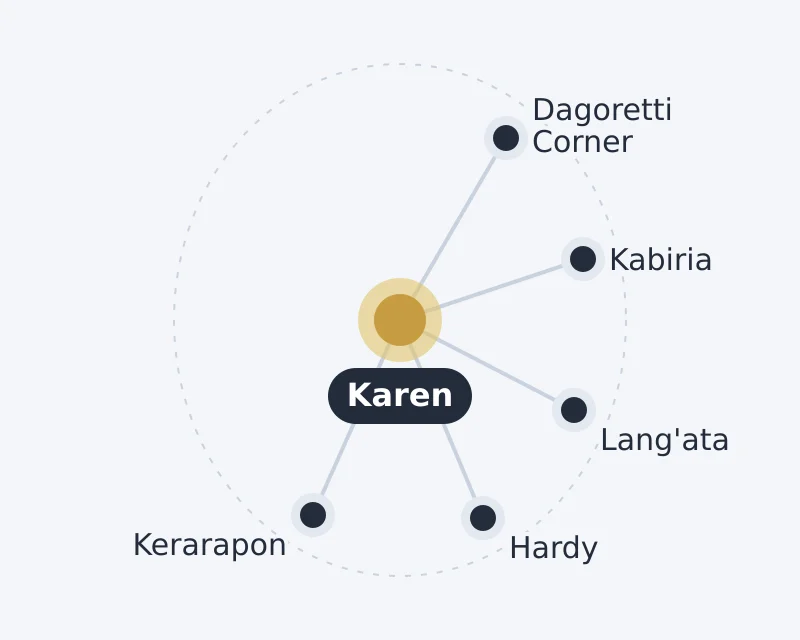
- Hardy: next to Karen with a similar feel. Worth checking for houses and townhouses.
- Kerarapon: quieter and leafy, with larger plots. Further out, so a car helps.
- Lang'ata: a mix of houses, townhouses and flats. Can be closer for some commutes.
- Dagoretti Corner: busier and more built up, with more flats and easier public transport.
- Kabiria: denser and often more budget-friendly, with more flats and bedsitters.
View a few houses in two or three of these areas. Compare the full monthly cost, not just the rent.
Before you pay anything
- Never pay before viewing. No deposit, booking fee or rent until you have seen the house.
- View the house in person. Check water, power, security and the road yourself. Meet the agent or landlord on site.
- Use verified listings. Find verified houses on ISHI Homes at homes.ishi.digital, and check the Karen area page as new houses are listed.