Juja Farm sits beyond Juja town in Kiambu County. It is a wide, quieter area where many people find more space and newer homes than in the busy town centre. If you are looking for houses to rent in Juja Farm, this guide covers what daily life is like, what to check before you move, and how it compares with nearby areas.
Juja Farm at a glance
- What it is: a large, spread-out area beyond Juja town, with newer estates, standalone houses and some apartment blocks.
- Main draw: more space, bigger compounds and newer homes than you often get in town.
- Main trade-off: longer trips to the main road, and services can be thinner the further in you go.
- Rent: as of 26 Oct 2026, ISHI Homes has no published listings in Juja Farm yet, so we do not quote rents here. Live houses will appear on the Juja Farm area page on ISHI Homes as agencies list them.
Rents in an area like this can change a lot from one estate to the next, so compare several houses before you decide.
Who living in Juja Farm suits, and who it does not
It may suit you if you:

- Want more room, a compound or a garden for children.
- Prefer a quieter place away from town noise.
- Work from home, or only travel to the city a few days a week.
- Have your own car or motorbike.
It may not suit you if you:
- Need to reach Nairobi early every day by public transport.
- Want shops, eateries and nightlife at your doorstep.
- Cannot handle unreliable water or rough roads in the rainy season.
Getting around
Most trips start with getting from your estate to Juja town, and then onto Thika Road to Nairobi or Thika.
- Inside Juja Farm: boda bodas (motorbike taxis) and shared vehicles are common. Ask locals what they pay so you are not overcharged.
- To the main road: travel time depends on how deep into Juja Farm you live and the state of the road.
- Roads: some roads are tarmac, others are murram (earth roads). Murram roads can get muddy and hard to use when it rains.
What to check:
- Do the trip from the house to Juja town at the time you would normally leave for work.
- Visit after rain if you can, or ask neighbours how the road behaves.
- Ask how late transport runs back to your estate at night.
Water and power
Water is one of the most important things to check in Juja Farm. Supply can differ a lot between estates.
Water - ask the landlord or agent:
- Is the house on a piped supply, a borehole (a deep well with a pump), or both?
- How many days a week does water come?
- Is there a storage tank, and how big is it?
- Will you need to buy water from vendors, and who pays for it?
- Is the water safe to drink, or should you boil or filter it?
Power:
- Check if the house has its own prepaid meter (token meter) so you only pay for what you use.
- Ask neighbours how often power goes off.
- Look at the wiring, sockets and the meter box during the viewing.
Safety
Safety can vary from one street or estate to another, so do not rely on general talk about the area.
What to check:
- Is the compound fenced with a working gate?
- Is there a guard or a caretaker who lives on site?
- Are there street or security lights at night?
- Are the doors and windows strong, with good locks and grills?
- Walk the route from the main road to the house after dark, if you can do so safely with someone.
- Ask a few neighbours, not just the agent, how they feel about safety.
Shopping and daily life
Daily shopping in the estates is often from small shops, kiosks and local markets. For bigger shopping trips, many residents go into Juja town or further along Thika Road.
Life here is slower and quieter than in town. That is a plus for many families, but it means more planning for errands. Ask where the nearest shop, gas refill point and chemist are from the house you are viewing.
Schools and health
There are schools and small health facilities around Juja and its surroundings, but quality and distance vary.
What to check:
- Visit the schools you are considering and ask about fees, transport and term dates.
- Ask if school vans serve your estate.
- Find the nearest clinic for minor issues and the nearest hospital for emergencies, and time the drive.
Internet
If you work from home, internet matters as much as water.
- Ask the landlord which home internet providers already serve the building or estate.
- Check mobile signal inside the house during the viewing.
- Ask neighbours how reliable their connection is, especially during power cuts.
Pros and cons of Juja Farm
| Pros | Cons |
|---|---|
| More space and bigger compounds | Longer trips to the main road |
| Many newer homes | Some roads are rough in the rain |
| Quieter than Juja town | Water supply can be uneven |
| Good for families and home workers | Fewer shops and services nearby |
Nearby alternatives
| Area | Why consider it |
|---|---|
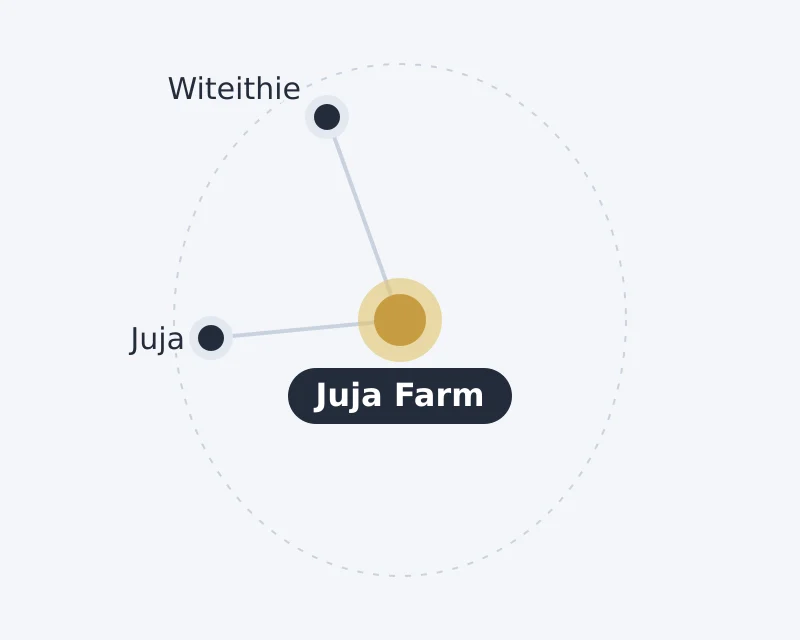
| Juja town | Closer to Thika Road, more shops and transport, but busier and often smaller units |
| Witeithie | Another option along the Thika Road side, worth comparing for access and price |
If daily travel to Nairobi is your main concern, Juja town or Witeithie may save you time. If space and a newer home matter more, Juja Farm is worth a look.
Before you pay anything
- Never pay before viewing. Do not send a deposit or booking fee for a house you have not seen.
- View the house in person. Check water, power, security and the road yourself, and meet the landlord or agent.
- Use verified listings. Find verified houses on ISHI Homes at homes.ishi.digital, and check the Juja Farm area page as new houses are listed.