Renting a house is one of the biggest monthly costs for most Kenyan families. Knowing your tenant rights in Kenya helps you avoid losing money, push back when a landlord goes too far, and pick a house with fewer surprises. This guide explains what the law and your lease protect, in plain words. There is a short Kiswahili summary near the end.
This is general information, not legal advice. For a serious dispute, talk to a lawyer or a free legal aid clinic.
Where your rights come from
Your rights as a tenant come from a few places:
- The Constitution of Kenya. It protects your right to privacy and your right to fair treatment. It also lists the right to accessible and adequate housing.
- Laws passed by Parliament. Some laws deal with renting directly. For example, the Rent Restriction Act covers homes with very low rent, and the Distress for Rent Act sets rules on when a landlord can take your goods for unpaid rent. The Land Act also has general rules about leases.
- Your lease (tenancy agreement). A lease is the contract between you and the landlord. It sets the rent, deposit, notice period and who fixes what. For most tenants, the lease is the main rulebook.
A new landlord and tenant law has been discussed in Kenya for years. Check whether it has passed before you rely on any older rule.
Your lease: read it before you sign
A written lease protects both you and the landlord. A verbal deal is still a deal, but it is much harder to prove later.
Before you sign, check that the lease says:
- The monthly rent and the date it is due
- How much the deposit is and when it will be refunded
- How much notice each side must give to end the tenancy
- Who pays for water, electricity, garbage and service charges
- Who handles repairs, and how you report a problem
- Rules on rent increases
- Whether you can sublet or have long-stay guests
If something the landlord promised is not written down, ask for it to be added. Keep your own signed copy.
Deposits: what is normal and how to get yours back
A deposit is money you pay at the start, held by the landlord as security against unpaid rent or damage. It should come back to you when you leave, minus any fair deductions.
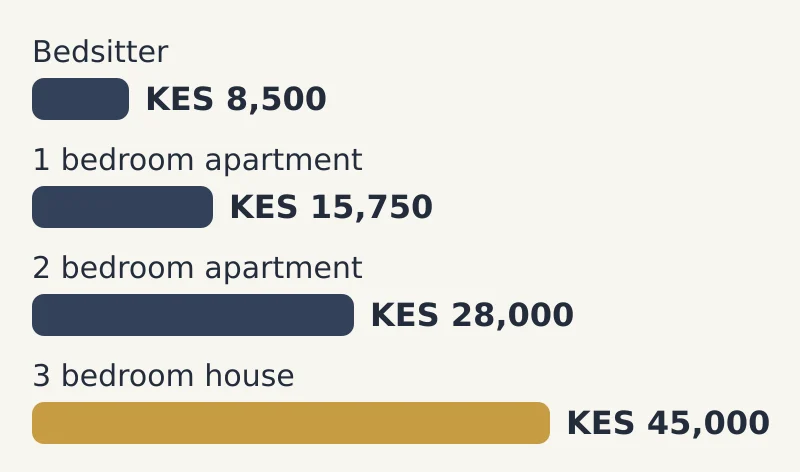
On ISHI Homes, most landlords ask for one month's rent as a deposit, plus the first month's rent. Some higher-end areas ask for more. Here are typical move-in amounts across all areas, as of 25 Oct 2026:
| House type | Median rent a month | Typical rent plus deposit |
|---|---|---|
| Bedsitter | KES 8,500 | KES 17,000 |
| 1 bedroom apartment | KES 15,750 | KES 31,500 |
| 2 bedroom apartment | KES 28,000 | KES 56,000 |
| 3 bedroom house | KES 45,000 | KES 90,000 |
In Kilimani, as of 25 Oct 2026, a 2 bedroom apartment had a median rent of KES 71,500 and typical rent plus deposit of KES 214,500. That is closer to two months' deposit plus rent, so always confirm the amount in writing.
To protect your deposit:
- Get a receipt for every payment, or pay through M-Pesa or bank so there is a record.
- Do a move-in check. Walk through the house with the landlord or caretaker. Take dated photos and videos of walls, floors, taps, sockets and doors.
- Write down existing damage and ask the landlord to sign the list.
- Give proper notice when you leave, as your lease says.
- Do a move-out check together, and ask when the refund will be paid.
A landlord can fairly deduct for unpaid bills or damage beyond normal wear and tear. Normal wear and tear means small marks and ageing that come from everyday living. If deductions seem unfair, ask for a written list with costs.
Repairs and a safe home
You have a right to a home that is safe and fit to live in. As a general rule:
- The landlord usually handles big repairs: the roof, structure, main plumbing, wiring, and water supply to the house.
- The tenant usually handles small things caused by daily use, like a blown bulb, and any damage they or their guests cause.
Your lease may set this out differently, so check it. When something breaks:
- Report it in writing (SMS, WhatsApp or email is fine) and keep the message.
- Give the landlord a reasonable time to fix it.
- Follow up in writing if nothing happens.
Do not stop paying rent on your own because of a repair problem. That can put you in breach of your lease. Get advice first.
Privacy: the landlord cannot walk in whenever they like
Once you rent a house, it is your home. The Constitution protects your privacy. A landlord or caretaker should not enter without your permission, except in a real emergency like a burst pipe or fire.
For inspections or repairs, a fair landlord gives you notice and agrees a time with you. Many leases spell out how much notice is needed. If yours does not, ask for it to be added.
Rent increases
A landlord cannot raise rent at any time they feel like it during a fixed-term lease, unless the lease allows it. Things to know:
- Check your lease for a clause on increases, how often they can happen and how much notice you get.
- For a month-to-month tenancy, a landlord should give reasonable written notice before a new rent starts, usually at least one full rental period.
- You can negotiate. You can also choose to give notice and move.
If an increase seems unfair or breaks your lease, put your objection in writing.
Eviction: what a landlord can and cannot do
This is where many tenants are caught out. A landlord can end a tenancy for good reasons, like unpaid rent or the end of the lease. But they must follow the proper process.
A landlord should not:
- Change the locks or lock you out
- Remove doors, windows or the roof
- Cut off water or electricity to force you out
- Throw out your things or seize them without legal process
- Threaten or harass you
These are known as self-help evictions, and Kenyan courts have treated them as unlawful.
What a proper process usually looks like:
- The landlord gives you written notice, as set in your lease. For a monthly tenancy without a written term, this is usually at least one month.
- If you do not leave, the landlord should go to court or the right tribunal for an order.
- Only a court officer or licensed auctioneer acting on a lawful order should remove people or goods.
If you owe rent, the landlord may have a legal right to recover it, including in some cases by taking goods through a licensed auctioneer. But this also has rules. Get advice quickly if it happens.
Your duties as a tenant
Rights come with duties. Doing your part makes it easier to defend yourself if things go wrong.
- Pay rent on time and keep proof.
- Look after the house and report damage early.
- Do not make big changes without written permission.
- Respect neighbours and building rules.
- Give proper notice before moving out.
Where to go if there is a dispute
Start simple:
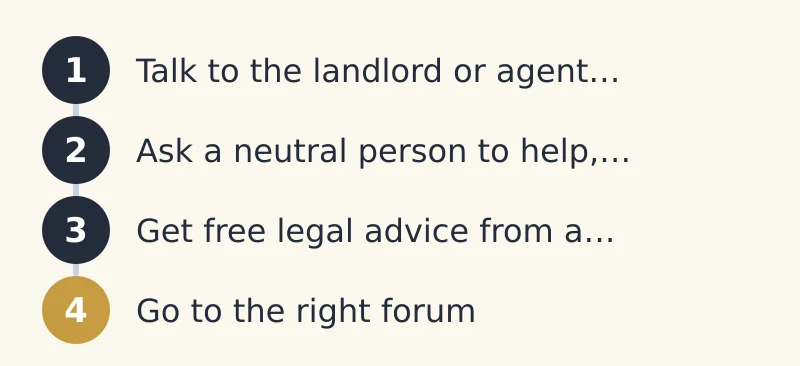
- Talk to the landlord or agent and put your complaint in writing.
- Ask a neutral person to help, like a residents' association, chief or mediator.
- Get free legal advice from a legal aid clinic or a university law clinic.
- Go to the right forum. Depending on the case, this could be the Small Claims Court for money disputes like an unpaid deposit, a magistrates' court, or the Rent Restriction Tribunal for homes covered by that Act.
Keep everything: the lease, receipts, M-Pesa messages, photos and chats. Good records are your strongest tool.
Muhtasari kwa Kiswahili
- Mkataba: Soma mkataba wa kupangisha kabla ya kusaini. Hakikisha kodi, amana, muda wa notisi na nani anarekebisha nini vimeandikwa.
- Amana (deposit): Pata risiti kwa kila malipo. Piga picha za nyumba unapohamia na unapohama. Amana inafaa kurudishwa, ukiondoa madeni au uharibifu halali tu.
- Marekebisho: Mwenye nyumba kwa kawaida hurekebisha matatizo makubwa kama paa, mabomba na umeme. Ripoti tatizo kwa maandishi.
- Faragha: Mwenye nyumba hapaswi kuingia bila ruhusa yako, isipokuwa wakati wa dharura.
- Kuongeza kodi: Lazima kufuata mkataba na kukupa notisi ya kutosha.
- Kufukuzwa: Mwenye nyumba hapaswi kubadilisha kufuli, kukata maji au stima, au kutoa mali yako bila amri ya mahakama.
- Wajibu wako: Lipa kodi kwa wakati, tunza nyumba, na toa notisi kabla ya kuhama.
Before you pay anything
Many rental scams start with a request for money before you have seen the house. Protect yourself:
- Never pay before viewing. No booking fee, viewing fee or deposit until you have seen the house.
- View the house in person. Photos and videos are not enough. Check the house, meet the landlord or agent, and confirm they have the right to rent it out.
- Use verified listings. Find verified houses on ISHI Homes at homes.ishi.digital.