Finding a house in Nairobi is hard enough. Losing your deposit to a fake agent, or finding hidden costs after you move in, makes it worse. This guide gives you the questions to ask a landlord in Kenya before you pay anything. For each one, you will see what a good answer sounds like and what a warning sign sounds like.
Save this page on your phone and use it during viewings and phone calls.
How to use these questions
- Ask them before you send any money, not after.
- Write down the answers, or ask for them by SMS or WhatsApp so you have a record.
- One vague answer is not always a problem. Several vague answers together usually are.
- If someone gets angry or rushes you because you ask questions, treat that as your answer.
Know what move-in usually costs
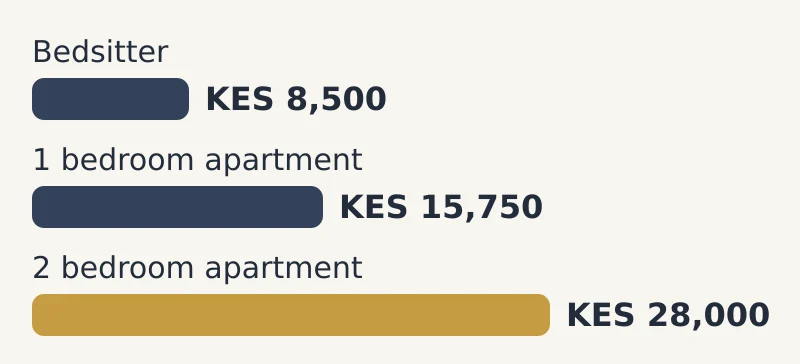
It helps to know normal figures so you can spot a strange demand. These are ISHI Homes listing figures across all areas, as of 25 Oct 2026:
| House type | Median rent a month | Typical rent plus deposit |
|---|---|---|
| Bedsitter | KES 8,500 | KES 17,000 |
| 1 bedroom apartment | KES 15,750 | KES 31,500 |
| 2 bedroom apartment | KES 28,000 | KES 56,000 |
For most listings, move-in is about one month's rent plus a deposit of one month. Some upmarket areas ask for more. In Kilimani, for example, a 2 bedroom apartment had a median rent of KES 71,500 and a typical rent plus deposit of KES 214,500 (as of 25 Oct 2026, based on 2 listings). Always ask for the exact breakdown.
Questions about who you are dealing with
1. Are you the owner, or do you work for the owner?
- Good answer: "I am the caretaker for the owner" or "I work for this agency, here is our office address." They give a clear name and role.
- Warning sign: "Just deal with me, the owner is abroad." They will not say who owns the house or who they work for.
2. Can you show me proof you are allowed to rent out this house?
- Good answer: An agent shows a business card, office location and company details you can check. A landlord can explain who manages the building and may show documents such as a letter of authority from the owner.
- Warning sign: "You don't need to see anything, trust me." No office, no company name, only a phone number.
3. Is there a viewing fee?
- Good answer: "No, viewing is free." Or a small fee that is explained clearly, with a receipt.
- Warning sign: "Send money first and I will send you the location." Never pay to get an address or to "hold" a house you have not seen.
Questions about money
4. What is the full amount I need to move in?
- Good answer: A written breakdown, for example: first month's rent, deposit, water deposit and any other charge, with a total.
- Warning sign: "Just bring around 60k, we will see." Numbers that change every time you ask.
5. How much is the deposit, and how do I get it back?
A deposit is money you pay at the start, kept by the landlord in case you leave damage or unpaid bills. It should come back to you when you leave if the house is in good condition.
- Good answer: "One month's rent. We refund it within a stated time after you move out, minus any damage we agree on." It is written in the agreement.
- Warning sign: "Deposits are not refunded here" or "We will discuss when you leave."
6. Are there other deposits, like water or electricity?
- Good answer: "Yes, a water deposit of a fixed amount, refundable." Clear amounts, clearly refundable or not.
- Warning sign: New charges appear only after you have paid the rent and deposit.
7. How do I pay rent, and to which account?
- Good answer: A paybill, till or bank account in the name of the owner, agency or property, the same one used by other tenants.
- Warning sign: "Send to my personal number" from someone you cannot verify, or "bring cash." Also be careful if the payment number changes suddenly.
8. Will I get a receipt for every payment?
- Good answer: "Yes, every payment gets a receipt or statement."
- Warning sign: "The M-Pesa message is enough" when the name on it does not match the owner or agency.
Questions about bills and services
9. Is water included, and how reliable is it?
- Good answer: "Water is billed by meter" or "It is included in rent." They tell you honestly how often water comes and whether there is a storage tank or borehole.
- Warning sign: "Water is never a problem" said too quickly. Ask neighbours too.
10. How does electricity work? Do I have my own token meter?
- Good answer: "Each unit has its own prepaid token meter." You can see the meter during viewing.
- Warning sign: A shared meter split among tenants with no clear method, or the landlord sells tokens at their own price.
11. Are there other monthly charges like garbage, security or service charge?
A service charge is a monthly fee for shared things like cleaning, security and lighting in common areas.
- Good answer: A list of each monthly charge and the amount, in writing.
- Warning sign: "Small small things, nothing much." Get the exact figures.
Questions about the house itself
12. Can I see the exact unit I will rent?
- Good answer: "Yes, this is your unit" and they show you the actual door number.
- Warning sign: They only show a "similar" unit or a show house, and the real one is "being cleaned."
13. Why did the last tenant leave?
- Good answer: A normal reason, like a job transfer or moving to a bigger house.
- Warning sign: Avoiding the question, or many empty units in the same building with no clear reason.
14. Who fixes things, and how fast?
- Good answer: "Call the caretaker or this number. Small repairs are done within a few days." They explain what the landlord fixes and what the tenant fixes.
- Warning sign: "Tenants fix everything themselves." Also check for leaks, damp walls and broken fittings during viewing.
15. What security does the building have?
- Good answer: They describe the gate, guard, lighting or other measures, and you can see them.
- Warning sign: "The area is very safe" with nothing to show. Visit at night too and ask neighbours.
Questions about the agreement and rules
16. Is there a written tenancy agreement, and can I read it before paying?
A tenancy agreement (or lease) is the written contract between you and the landlord. It sets the rent, deposit, rules and notice period.
- Good answer: "Yes, here is a copy, take your time to read it."
- Warning sign: "Pay first, we will sign later" or no written agreement at all.
17. How much notice do I give to move out, and how much notice before rent goes up?
- Good answer: A clear notice period, written in the agreement, for both moving out and rent increases.
- Warning sign: "Rent can change any time" or no notice period at all.
18. What are the house rules?
- Good answer: Clear rules on visitors, pets, parking, noise and running a business from home, ideally written down.
- Warning sign: No rules at viewing, then surprise fines later.
19. When can I move in, and will the house be ready?
- Good answer: A fixed date, with any repairs or painting finished before you move in.
- Warning sign: "Pay now, the current tenant will leave soon." You may pay and then wait for weeks.
20. Can we record the condition of the house before I move in?
- Good answer: "Yes, let us walk through and note any damage together." Take dated photos and videos of every room, and share them with the landlord or agent.
- Warning sign: "No need, the house is fine." Without a record, you may be blamed for old damage when you leave.
Quick checklist before you decide
- You know who owns the house and who you are paying.
- You have the full move-in cost in writing.
- Payment goes to a verified account, with receipts.
- You have read the tenancy agreement.
- You have photos of the house condition.
Before you pay anything
- Never pay before viewing. No viewing fee to get an address, no "booking fee" to hold a house you have not seen.
- View the house in person. Photos and videos can be old or copied from another listing. Go yourself, or send someone you trust.
- Start with verified listings. Find verified houses on ISHI Homes at homes.ishi.digital, and still ask these questions at every viewing.